Bill · H.R. 6787· House(119-HR-6787)
Clean Competition Act
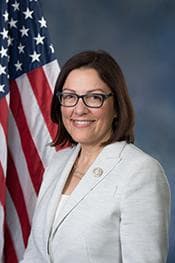
- Introduced
- 12/17/2025
- Last activity
- 12/17/2025 — Referred to the Committee on Ways and Means, and in addition to the Committees on Energy and Commerce, and Foreign Affairs, for a period to be subsequently determined by the Speaker, in each case for consideration of such provisions as fall within the jurisdiction of the committee concerned.
- Sponsored by
- Suzan DelBene
- Cosponsors
- - 6 - 0
- Introduced
- In Committee
What this bill would do
The Clean Competition Act creates a carbon intensity charge for certain domestic industrial facilities and imported primary and finished goods. It aims to reduce greenhouse gas emissions by taxing products that exceed specific carbon intensity benchmarks. The bill establishes a system for calculating carbon intensity, provides rebates for exports, and allows for the creation of "carbon clubs" with foreign partners. Additionally, it creates funding for grants, loans, and contracts to help industries adopt advanced, low-carbon technologies. It also allocates funds to the Department of State for international climate and clean energy assistance.
Yes· 3 of 24
Does this cut the pollution that drives climate change?+9
Imposes charges on high carbon intensity production and provides funding for decarbonization technology.
Does this put more money into wind, solar and other renewable power?+8
Provides grants and loans for advanced industrial technology designed to achieve net-zero carbon intensity.
Does this send more money or help to other countries?+8
Appropriates billions for bilateral and multilateral assistance to support climate and clean energy programs.
The opposite· 3 of 4
Does this reduce what the federal government spends?-5
Appropriates significant funds for industrial grants, loans, and international assistance.
Is this likely to lower the price at the pump?-4
Carbon charges on petroleum extraction and refining may increase end-user energy costs.
Would business owners be better off under this?-3
Increased compliance costs and carbon charges for those in covered industries.
Who it would affect, and how
Potential Positive Impacts for People
-
Domestic Job Creation: The Secretary shall give preference for funding to projects that provide the greatest potential for direct and indirect domestic job creation under section (c)(2)(C)(i)(V) and (c)(3)(B)(V).
-
Support for Distressed Communities: Funding preference is given to facilities in economically distressed communities that lost manufacturing jobs and those with high cumulative pollution burdens under section (c)(2)(C)(ii).
-
Improved Air Quality: Project preference is given to those that maximize improvement in local air quality under section (c)(2)(C)(i)(VI) and prioritize the reduction of hazardous local air quality under section (c)(3)(B)(VII).
-
Labor Protections: For entities awarded covered contracts, the bill requires the payment of prevailing wages and the establishment of community benefits agreements under section (c)(3)(D)(ii).
-
International Human Rights: Carbon club agreements require foreign countries to guarantee internationally recognized rights, including the elimination of forced and child labor and the right to collective bargaining under section 4694(b)(3).
-
Global Poverty Reduction: The Economic Support Fund of the Department of State prioritizes supporting human development and reductions in poverty under section (c)(d)(2)(E).
Potential Negative Impacts for People
-
Financial Burden on Producers: Eligible facilities that exceed carbon intensity benchmarks must pay a carbon intensity charge starting after December 31, 2025, under section 4692(a)(2).
-
Increased Costs for Importers: Entities importing covered primary goods and finished goods may be required to pay a charge if those goods exceed carbon intensity benchmarks, starting after December 31, 2025, and December 31, 2027, respectively, under section 4692(a)(1).
-
Reporting Requirements: Covered entities must report detailed electricity and production information to the government annually starting June 30, 2026, under section 4691(a).
-
Financial Risk for Grant Recipients: Funding awarded for advanced industrial technology can be recaptured by the Secretary if the entity fails to complete investments or maintain carbon intensity reductions under section (c)(2)(E).
Groups and Interests Ranking
Every group the model scored this bill for, from -10 to +10. Hover a score for the reason it gave.
- Demographic And Interest Groups
- Good For Union Workers+6Good For Low Income Households+5Good For African Americans+4Good For Children+4Good For Hispanic Americans+4Good For Native Americans+4Good For Urban Residents+4Good For Young Adults+4Good For Business Owners-3
- Environment Energy And Infrastructure
- Reduces Carbon Emissions+9Increases Renewable Energy Investment+8Improves Environmental Protections+7Reduces Fossil Fuel Production+5Reduces Gas Prices-4
- National Security And Foreign Policy
- Increases Foreign Aid+8Improves International Alliances+7Improves Diplomatic Engagement+6Improves International Trade+3
- Economy And Finance
- Increases Job Creation+7Increases Corporate Taxes+6Improves Union Protections+5Improves Economic Growth+4Reduces Government Spending-5Reduces Inflation-3
- Social Issues And Justice
- Improves Poverty Reduction+5Improves Racial Equity+4
- Education And Technology
- Increases Scientific Research Funding+7
- Governance And Ideology
- Increases Federal Power+4
- 1/16/2026
- 1 Cosponsor added.
- 12/17/2025
- Referred to the Committee on Ways and Means, and in addition to the Committees on Energy and Commerce, and Foreign Affairs, for a period to be subsequently determined by the Speaker, in each case for consideration of such provisions as fall within the jurisdiction of the committee concerned.
- 5 Cosponsors added.
- Introduced in House
One bill Congress.gov lists as related to this one — companions in the other chamber, earlier versions, and bills this one absorbed or was folded into.
 Ami Bera
Democrat · California
 Donald Beyer
Democrat · Virginia
 Kathy Castor
Democrat · Florida
 Judy Chu
Democrat · California
 Lloyd Doggett
Democrat · Texas
 Jimmy Panetta
Democrat · California