Bill · H.R. 6705· House(119-HR-6705)
Stopping Bonuses for Unsafe and Unsound Banking Act
- Introduced
- 12/15/2025
- Last activity
- 12/15/2025 — Referred to the House Committee on Financial Services.
- Sponsored by
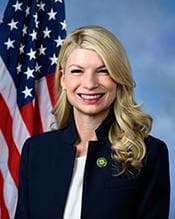
- Brittany Pettersen
- Cosponsors
- None
- Introduced
- In Committee
What this bill would do
This bill is called the Stopping Bonuses for Unsafe and Sound Banking Act. It stops large banking institutions from giving discretionary bonus payments to senior executive officers when they get a supervisory notice about a matter requiring immediate attention. This restriction applies until the matter is fixed to the satisfaction of the appropriate Federal banking agency. However, there is an exception if the institution submits a remediation plan to correct the matter by a certain deadline and the plan is accepted by the agency. The rules cover banking institutions with more than $50,000,000,000 in consolidated assets, including specific bank holding companies and bank subsidiaries.
Yes· 3 of 5
Does this give people more protection from unfair business practices?+5
By holding senior executives accountable for unresolved banking safety issues, the legislation helps protect consumers and the broader financial system.
Does this make the government pay for what it commits to?+3
The bill promotes financial stability by discouraging poor risk management in large banking institutions through executive compensation restrictions.
Would households on low incomes be better off under this?+2
General financial stability in large banking institutions helps protect low-income households from broader economic fallout.
The opposite· 3 of 4
Would the very wealthiest people be better off under this?-3
Top executives and ultra-high-net-worth individuals leading major banking institutions face direct caps on discretionary bonuses under supervisory notices.
Would billionaires be better off under this?-3
Billionaires holding executive leadership positions in large banking institutions face restrictions on discretionary compensation.
Would high-income households be better off under this?-2
Senior executives and high-income earners at large financial institutions face direct restrictions on receiving discretionary bonuses during safety violations.
Who it would affect, and how
Potential Positive Impacts for People
- Section 2(a): This provision stops large banks from paying discretionary bonuses to top executives when the bank has serious problems that need immediate attention. This is a positive outcome for the people because it holds high-ranking officials accountable and stops them from getting extra rewards when their institution is facing unresolved safety or soundness issues.
Potential Negative Impacts for People
- Section 2(b): This section creates an exception that allows banks to continue paying bonuses if they submit a remediation plan that is accepted by the banking agency and are still within the implementation period. Some might see this as a negative because executives could still receive bonus payments while working on fixing serious problems, rather than facing a total freeze until the issues are completely resolved.
Groups and Interests Ranking
Every group the model scored this bill for, from -10 to +10. Hover a score for the reason it gave.
- Economy And Finance
- Improves Consumer Protection+5Improves Fiscal Responsibility+3
- Demographic And Interest Groups
- Good For Low Income Households+2Good For Middle Class Households+2Good For Billionaires-3Good For Ultra High Net Worth Individuals-3Good For High Income Households-2Good For High Net Worth Individuals-2
- Governance And Ideology
- Increases Federal Power+2
- 12/15/2025
- Referred to the House Committee on Financial Services.
- Introduced in House