Bill · H.R. 6699· House(119-HR-6699)
Stop Communist Radio Act of 2025
- Introduced
- 12/12/2025
- Last activity
- 12/12/2025 — Referred to the House Committee on Energy and Commerce.
- Sponsored by
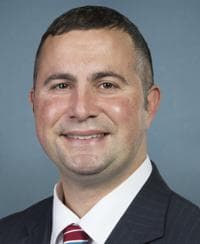
- Darren Soto
- Cosponsors
- None
- Introduced
- In Committee
What this bill would do
This bill, titled the "Stop Communist Radio Act of 2025," directs the Federal Communications Commission to create a grant program. The program aims to help certain radio stations deal with harmful interference from radio transmissions coming out of the Republic of Cuba. These grants would be awarded on a competitive basis to help stations acquire and operate specific technology and equipment. To be eligible, a station must have experienced this interference and submit a required application. The Commission will set terms to ensure the technology reduces interference without hurting other spectrum users.
Yes· 3 of 5
Would business owners be better off under this?+5
Small radio station owners benefit from grants to solve technical interference issues.
Does this make it easier to run a small business?+5
The bill provides direct financial assistance to small, independent radio stations to mitigate interference.
Would people in rural areas be better off under this?+3
The bill may benefit local radio stations serving rural or specific coverage areas facing interference.
The opposite
Does this reduce what the federal government spends?-1
The bill requires the establishment of a new federal grant program which involves government expenditure.
Who it would affect, and how
Potential Positive Impacts for People
-
Mitigation of Interference: Radio stations experiencing harmful interference from transmissions originating in Cuba can receive funds to acquire and operate technology and equipment to fix the problem (Section 2(a)).
-
Support for Small/Independent Stations: The grant program targets "covered radio stations," which are defined as those with a small coverage area and no affiliation with a radio network or government entity (Section 2(f)).
-
Regulatory Protection: Use of the new technology and equipment is treated as being in compliance with the Communications Act of 1934 and station licenses, provided the licensee follows the Commission's terms (Section 2(e)).
Potential Negative Impacts for People
-
Competitive Limitations: Because grants are awarded on a competitive basis, not all stations experiencing interference may receive the necessary funding (Section 2(a)).
-
Stringent Requirements: To receive a grant, a licensee must submit an application containing specific information and assurances as required by the Commission (Section 2(b)).
-
Operational Restrictions: Licensees must follow specific terms and conditions set by the Commission regarding how they operate the new technology and equipment (Section 2(d)).
Groups and Interests Ranking
Every group the model scored this bill for, from -10 to +10. Hover a score for the reason it gave.
- Demographic And Interest Groups
- Good For Business Owners+5Good For Rural Residents+3
- Economy And Finance
- Improves Small Business Support+5Reduces Government Spending-1
- Education And Technology
- Increases Scientific Research Funding+1
- Governance And Ideology
- Improves Government Transparency+1
- 12/12/2025
- Referred to the House Committee on Energy and Commerce.
- Introduced in House