Bill · H.R. 6684· House(119-HR-6684)
Zero Food Waste Act
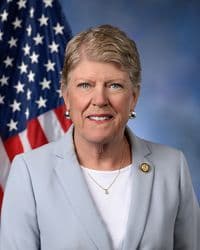
- Introduced
- 12/12/2025
- Last activity
- 12/12/2025 — Referred to the House Committee on Energy and Commerce.
- Sponsored by
- Julia Brownley
- Cosponsors
- - 4 - 0
- Introduced
- In Committee
What this bill would do
The "Zero Food Waste Act" establishes a grant program directed by the Environmental Protection Agency Administrator. The primary goal of this program is to reduce food waste by 50 percent by the year 2035, compared to 2015 levels. Grants can be awarded for studying food waste, collecting and reporting data, and carrying out various reduction projects. The bill includes provisions for differential pricing, technical assistance, and restrictions on how food waste is disposed of. It also outlines specific requirements for anaerobic digestion projects. This legislation authorizes up to $650,000,000 in appropriations for each fiscal year from 2026 through 2035.
Yes· 3 of 12
Does this better protect air, water and wildlife?+6
The bill aims to reduce food waste by 50 percent and regulates the disposal of organic waste via anaerobic digestion.
Would Native Americans be better off under this?+5
The bill explicitly directs the prioritization of grants for Tribal communities.
Does this narrow racial gaps in how people are treated?+5
The bill directs the EPA to prioritize grants for communities of color and Tribal communities disproportionately affected by environmental issues.
The opposite
Does this reduce what the federal government spends?-1
The bill authorizes significant new annual appropriations of $650 million through 2035.
Who it would affect, and how
Potential Positive Impacts for People
-
Reduction in Food Waste: The program aims to help reduce the amount of food waste by 50 percent by 2035 relative to 2015 levels (Sec. 2(a)(2)).
-
Support for Impacted Communities: The Administrator is directed to prioritize awarding grants to eligible entities that use them in communities of color, low-income communities, or Tribal communities that have been disproportionately affected by adverse human health or environmental effects (Sec. 2(b)(3)(ii)).
-
Resource for Research and Planning: Grants can be used to study food waste generation and develop plans for reduction activities, which helps identify effective policies and programs (Sec. 2(a)(3)(A)).
-
Data Transparency: The program allows for the collection of data on food waste and the publication of monthly or quarterly reports on a public website (Sec. 2(a)(3)(B)).
-
Economic Incentives and Assistance: Grants can fund technical assistance or implement differential pricing to incentivize food waste reduction activities (Sec. 2(a)(3)(C)(i)).
Potential Negative Impacts for People
-
Increased Costs for Disposal: The bill allows for the implementation of a differential pricing policy on the disposal of food waste to disincentivize incineration or landfill use (Sec. 2(a)(3)(C)(i)(II)).
-
Waste Disposal Restrictions: Grants may be used to implement restrictions on disposing of food waste via incineration or deposit in a landfill (Sec. 2(a)(3)(C)(i)(IV).
-
New Requirements for Waste Management: The bill allows for the implementation of specific food waste reduction activity requirements (Sec. 2(a)(3)(C)(i)(V).
Groups and Interests Ranking
Every group the model scored this bill for, from -10 to +10. Hover a score for the reason it gave.
- Demographic And Interest Groups
- Good For Native Americans+5Good For African Americans+4Good For Hispanic Americans+4Good For Low Income Households+4
- Environment Energy And Infrastructure
- Improves Environmental Protections+6Improves Rural Development+3
- Social Issues And Justice
- Improves Racial Equity+5Improves Poverty Reduction+2
- Education And Technology
- Increases Scientific Research Funding+5
- Economy And Finance
- Increases Job Creation+3Improves Small Business Support+2Reduces Government Spending-1
- Governance And Ideology
- Improves Government Transparency+4
- 1/15/2026
- 1 Cosponsor added.
- 12/12/2025
- Referred to the House Committee on Energy and Commerce.
- 3 Cosponsors added.
- Introduced in House
One bill Congress.gov lists as related to this one — companions in the other chamber, earlier versions, and bills this one absorbed or was folded into.
 Sean Casten
Democrat · Illinois
 Doris Matsui
Democrat · California
 Chellie Pingree
Democrat · Maine
 Jill Tokuda
Democrat · Hawaii