Bill · H.R. 6681· House(119-HR-6681)
National Scam Prevention Coordination Act
- Introduced
- 12/11/2025
- Last activity
- 12/11/2025 — Referred to the Committee on Energy and Commerce, and in addition to the Committees on Foreign Affairs, the Judiciary, and Financial Services, for a period to be subsequently determined by the Speaker, in each case for consideration of such provisions as fall within the jurisdiction of the committee concerned.
- Sponsored by
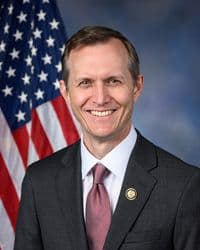
- George Whitesides
- Cosponsors
- - 0 - 1
- Introduced
- In Committee
What this bill would do
This bill proposes the creation of the Office of the National Fraud and Scam Prevention within the Executive Office of the President. The Office would be led by a Director appointed by the President, with the advice and consent of the Senate. The Director is tasked with serving as a principal advisor on fraud and scam prevention strategy, policy, and public education. Additionally, the Director will lead the coordination of national responses to fraud and scam campaigns that are deemed to have significant consequences. The Office will also oversee the implementation of prevention policies across various Federal departments and agencies. Finally, the authority granted by this Act is set to expire five years after it is enacted.
Yes· 3 of 10
Does this better protect the country from computer attacks?+4
The office is tasked with monitoring emerging technologies that may degrade the nation's fraud prevention posture and protecting economic and cybersecurity interests.
Would people over 65 be better off under this?+3
Enhanced prevention and public education on scams can protect vulnerable populations like seniors from financial fraud.
Does this give people more control over their personal data?+3
The bill establishes a fraud data shield program to facilitate the sharing of non-personally identifiable scam data.
The opposite
No question was scored the opposite.
Who it would affect, and how
Potential Positive Impacts for People
-
Enhanced Public Education: The Director is responsible for efforts to educate the public on how to best prevent falling victim to fraud and scams (Section 2(c)(1)(A)(vii)).
-
Improved Data Sharing: The bill establishes a fraud data shield program that allows entities to share non-personally identifiable scam data with the Office (Section 2(c)(1)(B)).
-
Legal Protections for Information Sharing: Any person who shares non-personally identifiable information with the Office in good faith is protected from liability in civil actions (Section 2(e)).
-
Coordinated Incident Response: The Office is tasked with leading the coordination of implementation for national fraud and scam prevention policy and ensuring integrated incident response for campaigns of significant consequence (Section 2(c)(1)(D) and Section 2(c)(1)(E)).
Potential Negative Impacts for People
- Limited Duration of Authority: The authority to operate the Office and carry out the functions of the Act will terminate five years after enactment (Section 2(g)).
Groups and Interests Ranking
Every group the model scored this bill for, from -10 to +10. Hover a score for the reason it gave.
- Demographic And Interest Groups
- Good For Seniors+3Good For Low Income Households+2Good For Middle Class Households+2Good For Urban Residents+1
- National Security And Foreign Policy
- Improves Cybersecurity Defense+4Improves International Alliances+2
- Education And Technology
- Improves Data Privacy+3
- Economy And Finance
- Improves Economic Growth+2
- Governance And Ideology
- Improves Government Transparency+1
- Social Issues And Justice
- Improves Policing Reform+1
- 12/11/2025
- Referred to the Committee on Energy and Commerce, and in addition to the Committees on Foreign Affairs, the Judiciary, and Financial Services, for a period to be subsequently determined by the Speaker, in each case for consideration of such provisions as fall within the jurisdiction of the committee concerned.
- 1 Cosponsor added.
- Introduced in House
 Jefferson Shreve
Republican · Indiana