Bill · H.R. 6676· House(119-HR-6676)
State Industrial Competitiveness Act of 2025
- Introduced
- 12/11/2025
- Last activity
- 12/11/2025 — Referred to the House Committee on Energy and Commerce.
- Sponsored by
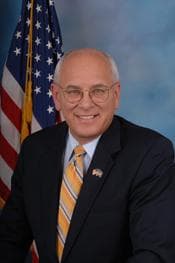
- Paul Tonko
- Cosponsors
- None
- Introduced
- In Committee
What this bill would do
The State Industrial Competitiveness Act of 2025 aims to provide financial assistance to States and Indian Tribes. This money is intended for creating, running, or growing "flex-tech energy programs" to help manufacturing stay competitive. These programs can provide technical help and financial aid to manufacturers for energy studies and implementing new measures. The bill includes specific requirements for how funds are used and allocated. It also authorizes $100,000,000 for each year from 2026 through 2030.
Yes· 3 of 9
Would business owners be better off under this?+6
The bill provides direct financial and technical assistance to help manufacturers reduce costs and implement new technologies.
Would Native Americans be better off under this?+5
The bill mandates that at least 5 percent of funds be set aside for Indian Tribes or manufacturers in Indian Country.
Does this make it easier to run a small business?+5
The bill includes specific provisions for technical assistance designed to meet the needs of manufacturers with fewer than 500 employees.
The opposite
No question was scored the opposite.
Who it would affect, and how
Potential Positive Impacts for People
-
Support for Manufacturers: The bill allows for financial assistance to help manufacturers implement various measures, such as those for energy and water-using systems, resiliency, and emissions reduction (Section 2(a)).
-
Technical and Administrative Help: Manufacturers can receive technical and administrative assistance through qualified engineering firms (Section 2(a)).
-
Detailed Planning for Businesses: Energy studies can provide manufacturers with evaluations of their systems, emissions, and potential cost savings, as well as recommendations for new technologies (Section 2(a)).
-
Dedicated Funding for Indian Tribes: The Secretary must set aside at least 5 percent of the funds to be distributed to Indian Tribes or directly to manufacturers located in Indian Country or Alaska Native Village Statistical Areas (Section 2(c)(2)).
-
Help for Smaller Manufacturers: The Secretary can provide technical assistance to help design programs that meet the needs of manufacturers employing fewer than 500 full-time equivalent employees and encourage advanced manufacturing processes (Section 2(d)).
Potential Negative Impacts for People
-
Funding Limitations for Individual Facilities: A State energy agency cannot use more than $100,000 or 5 percent of its total financial assistance for a single manufacturing facility (Section 2(c)(3)(B)).
-
Restrictions on Fund Usage: There are strict limits on how money can be spent, such as not using more than 50 percent for energy studies or more than 10 percent for administrative expenses (Section 2(c)(3)(A)).
-
Dependency on Appropriations: The assistance provided is subject to the availability of appropriations (Section 2(a)).
Groups and Interests Ranking
Every group the model scored this bill for, from -10 to +10. Hover a score for the reason it gave.
- Demographic And Interest Groups
- Good For Business Owners+6Good For Native Americans+5Good For Union Workers+2
- Economy And Finance
- Improves Small Business Support+5Increases Job Creation+3
- Environment Energy And Infrastructure
- Reduces Carbon Emissions+4Improves Environmental Protections+3
- Education And Technology
- Increases Scientific Research Funding+2
- Social Issues And Justice
- Improves Poverty Reduction+1
- 12/11/2025
- Referred to the House Committee on Energy and Commerce.
- Introduced in House