Bill · H.R. 6672· House(119-HR-6672)
Mental Health Professionals Workforce Shortage Loan Repayment Act of 2025
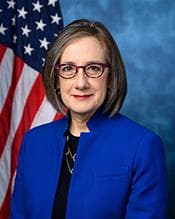
- Introduced
- 12/11/2025
- Last activity
- 12/11/2025 — Referred to the House Committee on Energy and Commerce.
- Sponsored by
- Andrea Salinas
- Cosponsors
- - 4 - 2
- Introduced
- In Committee
What this bill would do
This bill, titled the "Mental Health Professionals Workforce Shortage Loan Repayment Act of 2025," aims to amend the Public Health Service Act. It establishes a loan repayment program managed by the Secretary through the Health Resources and Services Administration. The program provides payments toward the principal and interest of eligible loans for mental health professionals. In exchange, these individuals must commit to a period of service in designated shortage areas. The program sets a maximum repayment limit of $250,000 per individual. It also authorizes annual appropriations of $25,000,000 for fiscal years 2026 through 2035.
Yes· 3 of 7
Does this reduce what student borrowers owe or repay?+8
The bill provides direct financial relief for student loans for eligible mental health professionals.
Would students be better off under this?+7
The bill provides a clear path to debt relief for students pursuing advanced degrees in mental health.
Does this make mental health care easier to get?+7
The bill aims to increase the availability of mental health professionals in shortage areas via loan repayment incentives.
The opposite
Does this reduce what the federal government spends?-1
The bill authorizes $250,000,000 in total new spending over ten years for loan repayments.
Who it would affect, and how
Potential Positive Impacts for People
-
Financial Relief for Professionals: Mental health professionals can receive payments toward their educational loans, including 1/6 of the principal and interest annually for five years, with the remainder paid upon completion of the sixth year (Section 2, subsection b).
-
Support for Education: The program covers various educational paths, including master's degrees, doctoral degrees, or post-doctoral study in mental health or related fields (Section 2, subsection c).
-
Addressing Healthcare Shortages: By requiring service in a mental health professional shortage area, the bill seeks to relieve workforce shortages in those specific locations (Section 2, introductory text).
Potential Negative Impacts for People
-
Service Obligations and Time Commitments: To receive the benefits, individuals must agree to up to 6 years of full-time employment in a shortage area (Section 2, subsection d).
-
Repayment Caps: The total amount of payments an individual can receive through this program is capped at $250,000 (Section 2, subsection b).
-
Risk of Financial Penalties: If an agreement is breached, the Secretary may establish a liquidated damages formula that individuals might be required to pay (Section 2, subsection f).
-
Restrictions on Overlapping Benefits: Individuals cannot use this program to receive double benefits alongside other federally supported loan forgiveness programs (Section 2, subsection e).
Groups and Interests Ranking
Every group the model scored this bill for, from -10 to +10. Hover a score for the reason it gave.
- Demographic And Interest Groups
- Good For Students+7Good For Young Adults+6Good For Low Income Households+3
- Healthcare
- Improves Mental Health Access+7Improves Healthcare Access+4
- Education And Technology
- Improves Student Loan Relief+8
- Economy And Finance
- Increases Job Creation+2Reduces Government Spending-1
- 4/20/2026
- 1 Cosponsor added.
- 3/4/2026
- 1 Cosponsor added.
- 2/24/2026
- 1 Cosponsor added.
- 12/11/2025
- Referred to the House Committee on Energy and Commerce.
- 3 Cosponsors added.
- Introduced in House
 Nikki Budzinski
Democrat · Illinois
 Becca Balint
Democrat · Vermont
 Angie Craig
Democrat · Minnesota
 Juan Ciscomani
Republican · Arizona
 Brian Fitzpatrick
Republican · Pennsylvania
 Paul Tonko
Democrat · New York