Bill · H.R. 6671· House(119-HR-6671)
REPAIR Infrastructure Act
- Introduced
- 12/11/2025
- Last activity
- 2/2/2026 — Referred to the Subcommittee on Highways and Transit.
- Sponsored by
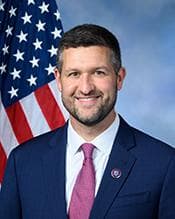
- Patrick Ryan
- Cosponsors
- - 4 - 0
- Introduced
- In Committee
What this bill would do
This bill, titled the "REPAIR Infrastructure Act," seeks to reauthorize and improve the reconnecting communities program. It authorizes $3,000,000,000 for each fiscal year from 2027 through 2031 to fund the REPAIR infrastructure program. The funding is divided into $750,000,000 for planning grants and $2,250,000,000 for capital construction grants. The act updates selection criteria to prioritize projects that promote affordable transportation, community participation, and economic stability. It also defines "divisive roadway infrastructure" and establishes specific restrictions on how grant funds can be used.
Yes· 3 of 13
Would households on low incomes be better off under this?+6
The bill provides assistance for renters and focuses on improving access to economic opportunities for underserved communities.
Would people with disabilities be better off under this?+6
The bill specifically prioritizes increasing safe mobility and connectivity for people with disabilities.
Does this expand the rights of people with disabilities?+6
The bill prioritizes transportation options that increase safe mobility and connectivity for people with disabilities.
The opposite
No question was scored the opposite.
Who it would affect, and how
Potential Positive Impacts for People
-
Increased Mobility and Access: The bill promotes the creation of new or improved affordable transportation options to increase safe mobility for all, including people with disabilities, to help them access jobs, healthcare, schools, and parks (Section 2(b)(1)(iv)).
-
Community Stability: The selection criteria include mechanisms to preserve affordability and prevent the displacement of existing residents through assistance for renters, legacy homeowners, and small businesses (Section 2(b)(1)(vi)).
-
Economic Opportunity: Projects are encouraged to create economically thriving communities by providing transportation choices that allow individuals to move freely and access opportunities (Section 2(b)(1)(iv)).
-
Community Engagement: The bill prioritizes applications that demonstrate robust community participation plans and formal partnerships with local organizations (Section 2(b)(1)(v)).
Potential Negative Impacts for People
- Restrictions on Highway Expansion: Grant funds from the REPAIR infrastructure program may not be used for projects that increase the number of travel lanes on an existing highway (Section 2(c)).
Groups and Interests Ranking
Every group the model scored this bill for, from -10 to +10. Hover a score for the reason it gave.
- Demographic And Interest Groups
- Good For Low Income Households+6Good For People With Disabilities+6Good For Business Owners+5Good For Urban Residents+5Good For African Americans+4Good For Hispanic Americans+3Good For Middle Class Households+3
- Social Issues And Justice
- Improves Disability Rights+6Improves Affordable Housing+5Improves Poverty Reduction+4
- Economy And Finance
- Improves Small Business Support+5Increases Job Creation+4
- Environment Energy And Infrastructure
- Improves Public Transit+5
- 2/25/2026
- 1 Cosponsor added.
- 2/2/2026
- Referred to the Subcommittee on Highways and Transit.
- 12/17/2025
- 1 Cosponsor added.
- 12/15/2025
- 1 Cosponsor added.
- 12/11/2025
- Referred to the House Committee on Transportation and Infrastructure.
- 1 Cosponsor added.
- Introduced in House
One bill Congress.gov lists as related to this one — companions in the other chamber, earlier versions, and bills this one absorbed or was folded into.
 Brendan Boyle
Democrat · Pennsylvania
 Dwight Evans
Democrat · Pennsylvania
 Shomari Figures
Democrat · Alabama
 John Mannion
Democrat · New York