Bill · H.R. 667· House(119-HR-667)
Noncontiguous Shipping Relief Act of 2024
- Introduced
- 1/23/2025
- Last activity
- 2/4/2025 — Sponsor introductory remarks on measure. (CR E90-91)
- Sponsored by
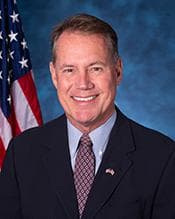
- Ed Case
- Cosponsors
- - 1 - 1
- Introduced
What this bill would do
The Noncontiguous Shipping Relief Act of 2024 aims to amend title 46 of the United States Code. It allows for the transportation of merchandise in noncontiguous trade using foreign qualified freight vessels. These vessels must be at least 1,000 gross tons, registered in a foreign country, and not built in the United States. The bill establishes specific rules for coastwise endorsements and foreign transfers of these vessels. It also addresses labor provisions, including liability for injury or death of crew members. Finally, the act sets standards for environmental and vessel requirements for those engaging in coastwise trade.
Yes· 3 of 5
Would union members be better off under this?+4
The bill allows crew members to be considered employees under the Longshore and Harbor Workers' Compensation Act.
Does this protect the right to fair treatment by the courts?+3
The bill provides a specific venue for legal actions involving crew injuries or death in proximate district courts.
Would business owners be better off under this?+2
The bill provides more flexibility for the transportation of merchandise in noncontiguous trade.
The opposite
No question was scored the opposite.
Who it would affect, and how
Potential Positive Impacts for People
-
Labor Protections for Crew Members: Employers may participate in an authorized compensation plan under the Longshore and Harbor Workers' Compensation Act, which would mean a master or crew member is considered an employee under that Act (Section 4(b)).
-
Legal Recourse for Injuries: In actions brought for the injury or death of a master or crew member where the employer does not reside or maintain an office in the U.S., the case can be brought in the district court most proximate to the place of the occurrence (Section 4(a)).
-
Standardized Safety and Environment: All vessels engaging in the United States coastwise trade must comply with all applicable United States and international environmental standards (Section 6).
-
Consistent Safety Standards: If a minimum requirement for vessels establishes a lower standard than what is applicable to foreign documented vessels admitted to the trade, the higher standard shall be applied to United States documented vessels (Section 5(b)).
Potential Negative Impacts for People
-
Requirement for Foreign Entities to Designate Agents: Non-citizens who own or operate vessels irregularly engaging in domestic coastwise trade must name an agent upon whom process may be served (Section 7(a)(1)).
-
Administrative Burdens for Foreign Vessels: Entities operating vessels in the domestic coastwise trade must post evidence of documentation and endorsements aboard the vessel, which includes information about owners, persons controlling vessels, and the number of port calls and trips made (Section 7(a)(3)).
Groups and Interests Ranking
Every group the model scored this bill for, from -10 to +10. Hover a score for the reason it gave.
- Demographic And Interest Groups
- Good For Union Workers+4Good For Business Owners+2
- Governance And Ideology
- Improves Due Process+3
- Environment Energy And Infrastructure
- Improves Environmental Protections+2
- Economy And Finance
- Improves Small Business Support+1
- 8/1/2025
- 1 Cosponsor added.
- 2/4/2025
- Sponsor introductory remarks on measure. (CR E90-91)
- 1/24/2025
- Referred to the Subcommittee on Coast Guard and Maritime Transportation.
- 1/23/2025
- Referred to the Committee on Transportation and Infrastructure, and in addition to the Committee on Education and Workforce, for a period to be subsequently determined by the Speaker, in each case for consideration of such provisions as fall within the jurisdiction of the committee concerned.
- 1 Cosponsor added.
- Introduced in House
 James Moylan
Republican · Guam
 Ritchie Torres
Democrat · New York