Bill · H.R. 6668· House(119-HR-6668)
Clean Water Standards for PFAS Act of 2025
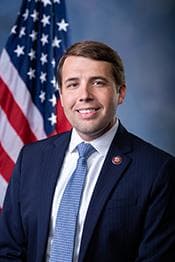
- Introduced
- 12/11/2025
- Last activity
- 2/2/2026 — Referred to the Subcommittee on Water Resources and Environment.
- Sponsored by
- Chris Pappas
- Cosponsors
- - 0 - 1
- Introduced
- In Committee
What this bill would do
The Clean Water Standards for PFAS Act of 2025 aims to establish water quality criteria and effluent limitation guidelines for perfluoroalkyl and polyfluoroalkyl substances. It directs the EPA Administrator to publish human health water quality criteria within three years. The bill sets specific deadlines for establishing standards across various industry categories, including organic chemicals, electroplating, and landfills. It also mandates monitoring requirements for several point source categories effective upon enactment. Additionally, the bill authorizes grants for the pretreatment of water contaminated by these substances.
Yes· 3 of 5
Does this better protect air, water and wildlife?+8
The bill establishes water quality criteria and effluent limitations to mitigate PFAS contamination in water sources.
Does this give the federal government more power?+5
The bill expands the regulatory authority of the EPA to establish new standards and monitoring requirements for various industries.
Would households on low incomes be better off under this?+4
Protecting water quality benefits all households, particularly those relying on publicly owned treatment works.
The opposite
Does this make it easier to run a small business?-3
The mandate for new effluent limitations and monitoring requirements imposes regulatory burdens on various industrial sectors.
Does this reduce what the federal government spends?-1
The bill authorizes hundreds of millions of dollars in new federal spending for grants and regulatory administration.
Who it would affect, and how
Potential Positive Impacts for People
-
Human Health Protections: The Administrator is required to publish human health water quality criteria to address measurable perfluoroalkyl and polyfluoroalkyl substances within three years (Section 2(b)(1)).
-
Improved Water Treatment: The bill provides for grants to owners and operators of publicly owned treatment works to carry out pretreatment activities that address contamination by these substances (Section 2(f)(1)(A)).
-
Better Monitoring of Local Sources: Grants are authorized to help monitor, assess, or analyze local sources of these substances that enter treatment works (Section 2(f)(1)(B)).
Potential Negative Impacts for People
-
Industry Regulatory Burdens: The bill mandates that the Administrator take final action on rules establishing effluent limitations guidelines and standards for various industry categories, such as organic chemicals, plastics, synthetic fibers, electroplating, metal finishing, textile mills, landfills, leather tanning and finishing, paint formulating, and plastics molding and forming (Section 2(b)(2)).
-
Increased Monitoring Requirements: The Administrator is required to mandate monitoring of discharges for several point source categories, including pulp, paper, and paperboard; airports; and electrical and electronic components (Section 2(c)(1)).
Groups and Interests Ranking
Every group the model scored this bill for, from -10 to +10. Hover a score for the reason it gave.
- Environment Energy And Infrastructure
- Improves Environmental Protections+8Improves Public Transit+2
- Demographic And Interest Groups
- Good For Low Income Households+4Good For Urban Residents+2
- Governance And Ideology
- Increases Federal Power+5
- Economy And Finance
- Improves Small Business Support-3Reduces Government Spending-1
- 2/2/2026
- Referred to the Subcommittee on Water Resources and Environment.
- 12/11/2025
- Referred to the House Committee on Transportation and Infrastructure.
- 1 Cosponsor added.
- Introduced in House
One bill Congress.gov lists as related to this one — companions in the other chamber, earlier versions, and bills this one absorbed or was folded into.
 Brian Fitzpatrick
Republican · Pennsylvania