Bill · H.R. 6654· House(119-HR-6654)
VAMOSA Act of 2025
- Introduced
- 12/11/2025
- Last activity
- 4/15/2026 — Forwarded by Subcommittee to Full Committee by Voice Vote.
- Sponsored by
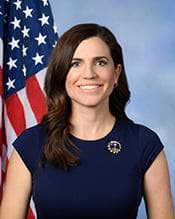
- Nancy Mace
- Cosponsors
- None
- Introduced
- In Committee
What this bill would do
The VAMOSA Act of 2025 requires the Secretary of Veterans Affairs to create and use a comprehensive policy for managing software assets throughout the Department. This policy must include maintaining an inventory of software, assessing interoperability, and eliminating waste, fraud, and abuse. The Chief Information Officer is tasked with coordinating significant software acquisitions and updating the policy at least every three years. Additionally, employees handling software must receive annual training regarding contract negotiations and cost models. The Secretary must also report any policy updates and estimated cost savings to Congress annually. This act is set to terminate five years after it is enacted.
Yes· 3 of 4
Does this reduce what the federal government spends?+5
The bill seeks to eliminate waste, fraud, and abuse in software procurement to realize cost savings.
Does this make what the government does easier for the public to see?+4
The bill requires the Secretary to provide an annual report to Congress regarding policy updates and realized cost savings.
Would veterans be better off under this, taking everything together?+3
The bill enhances the administrative efficiency and stewardship of the Department of Veterans Affairs.
The opposite
No question was scored the opposite.
Who it would affect, and how
Potential Positive Impacts for People
-
Elimination of Financial Waste: The bill directs the Department to identify and eliminate waste, fraud, and abuse by comparing inventories against purchase and vendor records (Section 2(b)(3)). This could ensure taxpayer money is used more efficiently by preventing over-procurement and redundant purchases.
-
Improved Financial Management: The policy requires adopting cost-effective licensing strategies, such as enterprise-wide agreements (Section 2(b)(5)). This could lead to better stewardship of Department resources.
-
Increased Accountability: The Secretary is required to include a description of policy updates and an estimate of realized cost savings in an annual report to Congress (Section 2(f)). This provides a mechanism to hold officials accountable for how software assets are managed.
-
Oversight of Implementation: The Comptroller General is required to submit a report to Congressional committees evaluating the implementation of the policy, any cost savings achieved, and the reduction of duplication (Section s 2(c)). This ensures an independent look at whether the policy is actually working.
Potential Negative Impacts for People
- No New Funding Provided: The act specifies that it must be implemented using existing personnel, systems, and funds, and it does not authorize additional appropriations (Section 2(e)). This could place an increased burden on current Department staff and resources without providing extra help to complete the required tasks.
Groups and Interests Ranking
Every group the model scored this bill for, from -10 to +10. Hover a score for the reason it gave.
- Economy And Finance
- Reduces Government Spending+5
- Governance And Ideology
- Improves Government Transparency+4
- Demographic And Interest Groups
- Good For Veterans+3
- National Security And Foreign Policy
- Improves Veterans Benefits+3
- 4/15/2026
- Subcommittee Consideration and Mark-up Session Held
- Forwarded by Subcommittee to Full Committee by Voice Vote.
- 3/25/2026
- Subcommittee Hearings Held
- 1/21/2026
- Referred to the Subcommittee on Oversight and Investigations.
- 12/11/2025
- Referred to the House Committee on Veterans' Affairs.
- Introduced in House