Bill · H.R. 6605· House(119-HR-6605)
Secure Our Skies Drone Safety Act of 2025
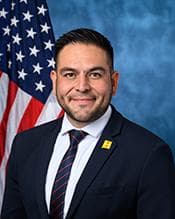
- Introduced
- 12/10/2025
- Last activity
- 2/2/2026 — Referred to the Subcommittee on Aviation.
- Sponsored by
- Gabe Vasquez
- Cosponsors
- - 0 - 2
- Introduced
- In Committee
What this bill would do
This bill, known as the "Secure Our Skies Drone Safety Act of 2025," directs the Comptroller General of the United States to conduct a study. The study focuses on the use of unmanned aircraft systems (UAS) by Federal, State, local, and Tribal agencies. It also looks at systems developed to counter these aircraft. The Comptroller General must submit a report to Congress within one year of the Act's enactment. This report will include recommendations and specific information regarding UAS deployment and countermeasures.
Yes· 3 of 9
Does this make what the government does easier for the public to see?+4
The bill requires a report on how frequently and for what purposes government agencies deploy drones.
Does this protect people from being watched or searched?+3
The study is intended to examine the privacy protections or expectations regarding the use of UAS.
Is this likely to create jobs?+3
The bill's focus on bolstering domestic UAS manufacturing capabilities may stimulate job growth in the manufacturing sector.
The opposite
No question was scored the opposite.
Who it would affect, and how
Potential Positive Impacts for People
-
Improved Security and Countermeasures: The report seeks recommendations on changing legal authorities and policies to improve how agencies counter threats from UAS (Section 2, Subsection 1, Subparagraph A). This could lead to better protection against aerial threats.
-
Strengthening Domestic Manufacturing: The bill asks for actions to bolster the ability of the United States and its allies to manufacture UAS and to simplify the procurement process (Section 2, Subsection 1, Subparagraph B). This could support the domestic economy and technological capabilities.
-
Increased Transparency on Drone Use: The report will detail how frequently UAS are used, for what purposes, and what governing policies or protocols are in place (Section 2, Subsection 2, Subparagraphs E and G). This provides insight into how agencies are operating.
-
Clarity on Privacy: The study will look into what privacy protections or expectations exist regarding the use of UAS (Section 2, Subsection 2, Subparagraph H). This is important for understanding how individual privacy is handled during drone use.
-
Training and Accountability: The report will identify if UAS operators are trained or certified (Section 2, Subsection 2, Subparagraph F) and look at the training for counter-UAS strategies (Section 2, Subsection 2, Subparagraph I). This helps ensure that those operating these systems are qualified.
Potential Negative Impacts for People
- Identifying Cost Barriers: The report will examine cost restrictions that might prevent law enforcement from expanding the use of UAS produced in the United States or in nations other than adversarial ones (Section 2, Subsection 2, Subparagraph D). This indicates that current costs may be a hurdle for agencies.
Groups and Interests Ranking
Every group the model scored this bill for, from -10 to +10. Hover a score for the reason it gave.
- Governance And Ideology
- Improves Government Transparency+4Improves Privacy Rights+3
- Economy And Finance
- Increases Job Creation+3Improves Small Business Support+2
- Demographic And Interest Groups
- Good For Business Owners+2Good For Urban Residents+1
- National Security And Foreign Policy
- Improves Cybersecurity Defense+2
- Social Issues And Justice
- Improves Policing Reform+2
- Education And Technology
- Increases Scientific Research Funding+1
- 2/2/2026
- Referred to the Subcommittee on Aviation.
- 1/12/2026
- 1 Cosponsor added.
- 12/10/2025
- Referred to the House Committee on Transportation and Infrastructure.
- 1 Cosponsor added.
- Introduced in House
 Brian Fitzpatrick
Republican · Pennsylvania
 Jennifer Kiggans
Republican · Virginia