Bill · H.R. 6589· House(119-HR-6589)
Ranked Choice Voting Act
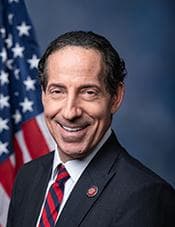
- Introduced
- 12/10/2025
- Last activity
- 12/10/2025 — Referred to the House Committee on House Administration.
- Sponsored by
- Jamie Raskin
- Cosponsors
- - 15 - 0
- Introduced
- In Committee
What this bill would do
The Ranked Choice Voting Act requires all States to use ranked choice voting for elections of Senators and Representatives in Congress. This system allows voters to rank candidates by preference rather than choosing just one. The bill mandates specific ballot designs and establishes a multi-round tabulation process to determine winners. It also prohibits States from holding separate runoff elections for these federal offices. To assist with implementation, the bill provides federal payments to States to cover various election-related costs. These changes are set to take effect for federal elections held on or after January 1, 2030.
Yes
Does this protect the right to vote?+5
The bill establishes a federal mandate for ranked choice voting and provides a private right of action for civil enforcement.
Does this make casting a ballot easier in practice?+4
The bill expands voter choice by allowing voters to rank multiple candidates on a single ballot.
Does this make what the government does easier for the public to see?+3
The bill mandates specific ballot designs and instructions to help voters navigate the ranked choice system.
The opposite
Does this make the government pay for what it commits to?-1
The bill authorizes federal payments to states to cover the costs of implementing ranked choice voting.
Who it would affect, and how
Potential Positive Impacts for People
-
Increased Voter Choice: The bill requires ballots to allow voters to rank candidates in order of choice, which includes the ability to rank at least five candidates or all candidates in the election (Section 321(a) and 321(b)(2)).
-
Financial Support for Election Infrastructure: States will receive federal payments based on the number of registered voters to help cover costs like voting equipment updates, software licenses, ballot printing, and voter education (Section 341(a)).
-
Legal Recourse for Voting Rights: The bill allows aggrieved individuals residing in a State to bring civil actions in federal court if a State fails to meet the requirements of the Act (Section 351(a)(2)).
Potential Negative Impacts for People
-
Prohibition of Traditional Runoffs: States are prohibited from holding separate runoff elections for Senators or Representatives in primary, special, or general elections (Section 322).
-
Complexity in Ballot Handling: Certain ballots may become "inactive" if all ranked candidates are eliminated or if a voter assigns the same ranking to multiple candidates at a specific level (Section 331(a)(4)(B)).
-
Tie-Breaking by Lot: If a tie occurs during the tabulation process, the winner may be determined by lot or another method provided under State law (Section 333(a)).
Groups and Interests Ranking
Every group the model scored this bill for, from -10 to +10. Hover a score for the reason it gave.
- Social Issues And Justice
- Improves Voting Rights+5Improves Voting Access+4
- Governance And Ideology
- Improves Government Transparency+3
- Economy And Finance
- Improves Fiscal Responsibility-1
- 12/10/2025
- Referred to the House Committee on House Administration.
- 15 Cosponsors added.
- Introduced in House
One bill Congress.gov lists as related to this one — companions in the other chamber, earlier versions, and bills this one absorbed or was folded into.
 Donald Beyer
Democrat · Virginia
 Steve Cohen
Democrat · Tennessee
 Angie Craig
Democrat · Minnesota
 Pramila Jayapal
Democrat · Washington
 Teresa Leger Fernandez
Democrat · New Mexico
 Summer Lee
Democrat · Pennsylvania
 Seth Moulton
Democrat · Massachusetts
 Kelly Morrison
Democrat · Minnesota
 Ilhan Omar
Democrat · Minnesota
 Chellie Pingree
Democrat · Maine
 Scott Peters
Democrat · California
 Ayanna Pressley
Democrat · Massachusetts
 Delia Ramirez
Democrat · Illinois
 Eric Swalwell
Democrat · California
 Shri Thanedar
Democrat · Michigan