Bill · H.R. 6487· House(119-HR-6487)
SECURE STEM Act
- Introduced
- 12/5/2025
- Last activity
- 12/5/2025 — Referred to the Committee on the Judiciary, and in addition to the Committee on Science, Space, and Technology, for a period to be subsequently determined by the Speaker, in each case for consideration of such provisions as fall within the jurisdiction of the committee concerned.
- Sponsored by
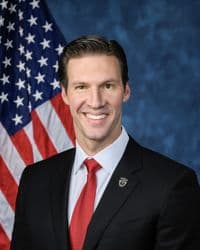
- Pat Harrigan
- Cosponsors
- - 4 - 0
- Introduced
- In Committee
What this bill would do
This bill is known as the Securing Education and Critical U.S. Research and Employment in STEM Act of 2025 or the SECURE STEM Act. It stops the issuance of certain visas and admission to the United States for nationals from countries including the People's Republic of China, the Russian Federation, the Islamic Republic of Iran, the Democratic People's Republic of Korea, and the Republic of Cuba. It also stops national research laboratories from employing these covered foreign nationals who are already in the United States under those specific visa categories. The Secretaries of State and Homeland Security can jointly waive these restrictions if they determine it is in the national interest of the United States. The bill requires biannual reports to specific congressional committees regarding any waivers that are granted. Finally, it mandates that the Secretary of State and Secretary of Homeland Security make necessary rules to carry out the Act within 90 days of enactment.
Yes· 3 of 5
Does this better protect the country from computer attacks?+7
Limiting the employment of nationals from adversarial countries at national research laboratories protects critical U.S. research and technology from espionage.
Does this make patent and copyright rules fairer?+6
The legislation safeguards critical U.S. research and intellectual property within STEM fields from foreign theft.
Does this tighten control of the border?+5
The bill restricts certain visas and employment for nationals from specific adversarial nations to protect national security.
The opposite· 3 of 4
Would immigrants be better off under this?-7
The legislation creates strict visa and employment prohibitions for nationals from specific countries seeking entry or work in U.S. STEM fields.
Does this make it easier for immigrants already here to become citizens?-5
The bill places strict prohibitions on issuing visas to nationals from designated countries, hindering potential pathways.
Would students be better off under this?-3
The inclusion of student visas in the prohibited categories could disrupt academic enrollment and research collaboration for affected nationals.
Who it would affect, and how
Potential Positive Impacts for People
-
Section 2(c) allows the Secretary of State and the Secretary of Homeland Security to grant a national interest waiver for specific individuals if it is determined to be in the national interest of the United States, which provides flexibility to include certain people when needed.
-
Section 3 requires the government to submit biannual reports to congressional committees detailing the total number of waivers granted, justifications for those waivers, and biographical information about waiver recipients, which helps hold our elected officials and government agencies accountable for their actions.
Potential Negative Impacts for People
-
Section 2(a) prohibits the issuance of certain visas and admission to the United States for nationals from the People's Republic of China, the Russian Federation, the Islamic Republic of Iran, the Democratic People's Republic of Korea, and the Republic of Cuba who are seeking entry under covered visa categories.
-
Section 2(b) stops national research laboratories from employing covered foreign nationals who are present in the United States under a covered visa category on the date of enactment, which could burden or disrupt current employment at these facilities.
Groups and Interests Ranking
Every group the model scored this bill for, from -10 to +10. Hover a score for the reason it gave.
- Demographic And Interest Groups
- Good For Immigrants-7Good For Students-3
- Governance And Ideology
- Increases Federal Power+4Improves Government Transparency+3
- Education And Technology
- Improves Intellectual Property Fairness+6
- National Security And Foreign Policy
- Improves Cybersecurity Defense+7Improves Diplomatic Engagement-3
- Social Issues And Justice
- Improves Border Security+5Improves Pathway To Citizenship-5
- 12/15/2025
- 1 Cosponsor added.
- 12/11/2025
- 1 Cosponsor added.
- 12/9/2025
- 1 Cosponsor added.
- 12/5/2025
- Referred to the Committee on the Judiciary, and in addition to the Committee on Science, Space, and Technology, for a period to be subsequently determined by the Speaker, in each case for consideration of such provisions as fall within the jurisdiction of the committee concerned.
- 1 Cosponsor added.
- Introduced in House
 Mike Haridopolos
Republican · Florida
 Ronny Jackson
Republican · Texas
 John Moolenaar
Republican · Michigan
 Keith Self
Republican · Texas