Bill · H.R. 6473· House(119-HR-6473)
The Facilitating Increased Resilience, Environmental Weatherization And Lowered Liability (FIREWALL) Act
- Introduced
- 12/4/2025
- Last activity
- 12/4/2025 — Referred to the House Committee on Ways and Means.
- Sponsored by
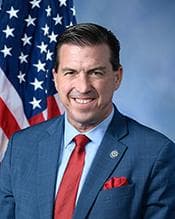
- Kevin Mullin
- Cosponsors
- - 0 - 1
- Introduced
- In Committee
What this bill would do
This bill, known as the "The Facilitating Increased Resilience, Environmental Weatherization And Lowered Liability (FIREWALL) Act," proposes to amend the Internal Revenue Code of 1986. It seeks to establish a new refundable personal tax credit for qualified disaster mitigation expenditures. This credit would allow individuals to claim 50 percent of certain expenditures made for their principal residence. The bill includes specific rules regarding maximum credit amounts, income phaseouts, and rules for jointly occupied dwellings. It also defines what constitutes a qualified expenditure and a qualified dwelling unit.
Yes· 3 of 6
Would middle-income households be better off under this?+5
The credit provides significant relief for homeowners to invest in disaster preparedness.
Does this cut taxes for middle-income families?+5
The bill provides a refundable tax credit of up to $25,000 for disaster mitigation expenditures for principal residences.
Would households on low incomes be better off under this?+4
The credit is refundable, providing direct financial support for home resilience regardless of tax liability.
The opposite
Does this reduce what the federal government spends?-2
The bill creates a new refundable tax credit which reduces federal tax revenue.
Who it would affect, and how
Potential Positive Impacts for People
-
Financial Assistance for Home Safety: Individuals can receive a tax credit equal to 50 percent of qualified disaster mitigation expenditures, providing financial relief for those hardening their homes against disasters (Section 2(a)).
-
Broad Range of Protective Improvements: The bill allows for many different types of home improvements, such as strengthening roof attachments, installing storm shelters, adding flood vents, or creating fire buffers through vegetation management (Section 2(c)(1)(A)).
-
Support for High-Risk Areas: The credit is specifically aimed at people living in areas that have experienced federal natural disaster declarations or received FEMA assistance for wildfires, hurricanes, windstorms, or floods within the last 10 years (Section 2(c)(2)(A)).
-
Inflation Protection: The maximum credit amounts and income thresholds are subject to annual inflation adjustments to ensure the benefit keeps up with rising costs (Section 2(b)(4)).
Potential Negative Impacts for People
-
Income Restrictions: The credit is subject to a phaseout, meaning the maximum amount available to a taxpayer is reduced if their adjusted gross income exceeds $200,000 (Section 2(a)(b)(2)).
-
Caps on Total Benefits: There is a limit on the total credit a taxpayer can receive, which is $25,000 (or $12,500 for certain married individuals filing separately), subject to inflation adjustments (Section 2(a)(b)(1)).
-
Strict Documentation Requirements: To claim the credit, taxpayers are required to provide the Secretary with adequate documentation regarding their specific expenditures (Section 2(d)(1)).
-
Restrictions on Double Dipping: The credit cannot be claimed for any expenditures that have already been paid, funded, or reimbursed by insurance or any level of government entity (Section 2(c)(1)(B)).
Groups and Interests Ranking
Every group the model scored this bill for, from -10 to +10. Hover a score for the reason it gave.
- Demographic And Interest Groups
- Good For Middle Class Households+5Good For Low Income Households+4Good For High Income Households+2
- Environment Energy And Infrastructure
- Improves Environmental Protections+4
- Economy And Finance
- Reduces Middle Class Taxes+5Reduces Government Spending-2
- Social Issues And Justice
- Improves Affordable Housing+3
- 12/4/2025
- Referred to the House Committee on Ways and Means.
- 1 Cosponsor added.
- Introduced in House
One bill Congress.gov lists as related to this one — companions in the other chamber, earlier versions, and bills this one absorbed or was folded into.
 Maria Salazar
Republican · Florida