Bill · H.R. 6449· House(119-HR-6449)
DO NOT Call Act
- Introduced
- 12/4/2025
- Last activity
- 12/4/2025 — Referred to the House Committee on Energy and Commerce.
- Sponsored by
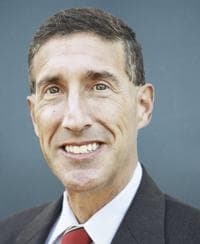
- David Kustoff
- Cosponsors
- - 3 - 11
- Introduced
- In Committee
What this bill would do
This bill, known as the "DO NOT Call Act," aims to modify penalties for violating the Telephone Consumer Protection Act of 1993. It introduces criminal penalties for individuals who willfully and knowingly violate these regulations. Under the new rules, violators could face up to one year in prison and fines. More severe penalties, including up to three years in prison, apply to aggravated offenses such as repeat violations or large-scale calling operations. The bill also increases the fines for providing inaccurate caller identification information.
Yes· 3 of 6
Does this give people more protection from unfair business practices?+7
The bill increases penalties for inaccurate caller identification and introduces criminal penalties for unlawful calling practices to protect consumers.
Would households on low incomes be better off under this?+5
Increased penalties for calls causing financial loss provide greater protection for vulnerable individuals against telephone-based fraud.
Would middle-income households be better off under this?+5
The bill provides stronger deterrence against intrusive and fraudulent telemarketing calls that target middle-income families.
The opposite
Does this shorten or soften prison sentences?-3
The bill introduces new criminal penalties and increased prison terms for certain telephone communication violations.
Does this get reliable internet to more people?-1
The bill's focus on regulating text messages and automated calls may create new compliance burdens for digital communication services.
Who it would affect, and how
Potential Positive Impacts for People
-
Increased Criminal Deterrence: The bill introduces criminal penalties, including potential imprisonment for up to one year, for those who willfully and knowingly violate the law (Section 2, subsection a, paragraph 1).
-
Higher Penalties for Large-Scale Offenders: It creates harsher punishments, including up to three years in prison, for aggravated offenses such as initiating massive volumes of calls (Section 2, subsection a, paragraph 2, subparagraph B).
-
Protection Against Criminal Intent: The bill targets offenders who use calls to further a felony or conspiracy (Section 2, subsection a, paragraph 2, subparagraph C).
-
Financial Loss Protection: The law provides for increased penalties for offenses that cause a loss of $5,000 or more to one or more persons (Section 2, subsection a, paragraph 2, subparagraph D).
-
Better Caller Identification: The bill increases the fines for providing inaccurate caller identification information from $10,000 to $20,000 (Section 2, subsection b).
Potential Negative Impacts for People
-
Increased Prison Time for Repeat or Large-Scale Callers: Individuals involved in high-volume calling operations—such as those exceeding 100,000 calls in a day—could face up to three years in prison (Section 2, subsection a, paragraph 2, subparagraph B).
-
Increased Penalties for Inaccurate Information: Those providing caller identification information face a doubled fine of $20,000 if the information provided is inaccurate (Section 2, subsection b).
Groups and Interests Ranking
Every group the model scored this bill for, from -10 to +10. Hover a score for the reason it gave.
- Demographic And Interest Groups
- Good For Low Income Households+5Good For Middle Class Households+5Good For High Income Households+4Good For Urban Residents+3
- Economy And Finance
- Improves Consumer Protection+7
- Governance And Ideology
- Improves Government Transparency+3
- Social Issues And Justice
- Improves Criminal Sentencing Reform-3
- Education And Technology
- Improves Internet Access-1
- 10/1/2026
- 1 Cosponsor added.
- 3/24/2026
- 1 Cosponsor added.
- 1/12/2026
- 1 Cosponsor added.
- 12/23/2025
- 2 Cosponsors added.
- 12/16/2025
- 1 Cosponsor added.
- 12/15/2025
- 1 Cosponsor added.
- 12/4/2025
- Referred to the House Committee on Energy and Commerce.
- 7 Cosponsors added.
- Introduced in House
One bill Congress.gov lists as related to this one — companions in the other chamber, earlier versions, and bills this one absorbed or was folded into.
 Sharice Davids
Democrat · Kansas
 Charles Fleischmann
Republican · Tennessee
 Brian Fitzpatrick
Republican · Pennsylvania
 Marie Perez
Democrat · Washington
 Laura Gillen
Democrat · New York
 Jared Moskowitz
Democrat · Florida
 Kristen McDonald Rivet
Democrat · Michigan
 Johnny Olszewski
Democrat · Maryland
 Jimmy Panetta
Democrat · California
 Chris Pappas
Democrat · New Hampshire
 Deborah Ross
Democrat · North Carolina
 Josh Riley
Democrat · New York
 Dale Strong
Republican · Alabama
 Eugene Vindman
Democrat · Virginia