Bill · H.R. 6409· House(119-HR-6409)
FENCES Act
- Introduced
- 12/3/2025
- Last activity
- 4/17/2026 — Received in the Senate and Read twice and referred to the Committee on Environment and Public Works.
- Sponsored by
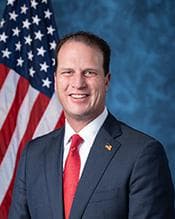
- August Pfluger
- Cosponsors
- - 2 - 0
- Introduced
- Passed House
- In Senate committee
What this bill would do
The FENCES Act seeks to amend the Clean Air Act regarding emissions originating from outside of the United States. It clarifies that emissions from outside the country are covered regardless of whether they result from human activity. The bill prevents an area from being designated a nonattainment area if the State proves it would meet standards but for these foreign emissions. Additionally, it provides relief from certain sanctions and fees for specific nonattainment areas. This relief applies if a State demonstrates that deficiencies were caused by emissions from outside the area, exceptional events, or certain uncontrollable mobile sources.
Yes· 3 of 4
Does this leave more decisions to the states?+4
The bill provides states with legal relief and protections against federal sanctions when air quality issues are caused by external factors.
Is this likely to grow the economy?+3
The bill prevents financial sanctions and fees on states that cannot control foreign emissions, which helps maintain local economic stability.
Would households on low incomes be better off under this?+2
The relief from state-imposed fees and sanctions may help prevent the economic costs of air quality regulation from being passed down to residents.
The opposite
Does this better protect air, water and wildlife?-2
The bill makes it more difficult to designate areas as nonattainment due to foreign emissions, which could potentially delay local air quality interventions.
What Congress actually voted on
2 recorded votes have been taken on this bill. One of them decided something; the rest moved it along.
- The House: the vote on whether to pass the billPassed 220–208
This is the real decision in this chamber. Passing here sends the bill to the other chamber, which must pass it too before it can go to the President.
04/16/2026 · Roll call 116 · recorded as “On Passage”
Who it would affect, and how
Potential Positive Impacts for People
-
Prevention of Nonattainment Designations: Under Section 2(b), an area may not be designated as a nonattainment area if the State proves that the area would meet air quality standards but for emissions coming from outside the United States. This could benefit local communities by preventing certain regulatory designations.
-
Relief from Sanctions and Fees: According to Section 2(c), specific nonattainment areas (such as Severe or Extreme areas for ozone or Serious areas for particulate matter) may avoid sanctions or fees if they can demonstrate that the failure to meet standards was due to emissions from outside the area, exceptional events, or uncontrollable mobile sources.
Potential Negative Impacts for People
- Obligation to Implement Measures Remains: Section 2(c)(b) states that the inapplicability of sanctions or fees does not affect the obligation of a State, area, source, or other entity to establish and implement measures to attain national ambient air quality standards for ozone or particulate matter.
Groups and Interests Ranking
Every group the model scored this bill for, from -10 to +10. Hover a score for the reason it gave.
- Demographic And Interest Groups
- Good For Low Income Households+2Good For Urban Residents+2
- Governance And Ideology
- Increase States Rights+4
- Economy And Finance
- Improves Economic Growth+3
- Environment Energy And Infrastructure
- Improves Environmental Protections-2
- 4/17/2026
- Received in the Senate and Read twice and referred to the Committee on Environment and Public Works.
- 4/16/2026
- Motion to reconsider laid on the table Agreed to without objection.
- Passed/agreed to in House: On passage Passed by the Yeas and Nays: 220 - 208 (Roll no. 116).
- On passage Passed by the Yeas and Nays: 220 - 208 (Roll no. 116).
- On motion to recommit Failed by the Yeas and Nays: 213 - 215 (Roll no. 115).
- Considered as unfinished business. (consideration: CR H2937-2938)
- 4/15/2026
- POSTPONED PROCEEDINGS - At the conclusion of debate on H.R. 6409, the Chair put the question on motion to recommit, and by voice vote, announced that the noes had prevailed. Mr. Min demanded the yeas and nays and the Chair postponed further proceedings until a time to be announced.
- The previous question on the motion to recommit was ordered pursuant to clause 2(b) of rule XIX.
- Mr. Min moved to recommit to the Committee on Energy and Commerce. (text: CR H2908-2909)
- The previous question was ordered pursuant to the rule.
- DEBATE - The House proceeded with one hour of debate on H.R. 6409.
- Rule provides for consideration of H.R. 6387, H.R. 6398, H.R. 6409 and H. Res. 1156. The resolution provides for consideration of each measure under a closed rule with one hour of general debate on each measure. The resolution also provides one motion to recommit on H.R. 6387, H.R. 6398, and H.R. 6409.
- Considered under the provisions of rule H. Res. 1174. (consideration: CR H2902-2909; text: CR H2902-2903)
- Rules Committee Resolution H. Res. 1174 Reported to House. Rule provides for consideration of H.R. 6387, H.R. 6398, H.R. 6409 and H. Res. 1156. The resolution provides for consideration of each measure under a closed rule with one hour of general debate on each measure. The resolution also provides one motion to recommit on H.R. 6387, H.R. 6398, and H.R. 6409.
- 4/14/2026
- Supplemental report filed by the Committee on Energy and Commerce, H. Rept. 119-594, Part II.
- 4/9/2026
- Reported by the Committee on Energy and Commerce. H. Rept. 119-594.
- Placed on the Union Calendar, Calendar No. 514.
- 2/24/2026
- 1 Cosponsor added.
- 1/21/2026
- Committee Consideration and Mark-up Session Held
- Ordered to be Reported by the Yeas and Nays: 25 - 22.
- 12/10/2025
- Subcommittee Consideration and Mark-up Session Held
- Forwarded by Subcommittee to Full Committee by the Yeas and Nays: 14 - 11.
- 12/9/2025
- 1 Cosponsor added.
- 12/3/2025
- Referred to the House Committee on Energy and Commerce.
- Referred to the Subcommittee on Environment.
- Introduced in House
2 bills Congress.gov lists as related to this one — companions in the other chamber, earlier versions, and bills this one absorbed or was folded into.
- 119-S-3836: FENCES Act
- 119-HRES-1174: Providing for consideration of the bill (H.R. 6387) to amend the Clean Air Act to require revisions to regulations governing the review and handling of air quality monitoring data influenced by exceptional events or actions to mitigate wildfire risk; providing for consideration of the bill (H.R. 6398) to amend the Clean Air Act relating to review by the Environmental Protection Agency of proposed legislation; providing for consideration of the bill (H.R. 6409) to amend the Clean Air Act to clarify standards for emissions emanating from outside of the United States, and for other purposes; and providing for consideration of the resolution (H. Res. 1156) expressing support for tax policies that support working families.
 Dan Crenshaw
Republican · Texas
 Jeff Crank
Republican · Colorado