Bill · H.R. 6408· House(119-HR-6408)
ANCHOR Act of 2025
- Introduced
- 12/3/2025
- Last activity
- 12/3/2025 — Referred to the House Committee on Energy and Commerce.
- Sponsored by
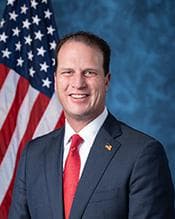
- August Pfluger
- Cosponsors
- None
- Introduced
- In Committee
What this bill would do
The ANCHOR Act of 2025 seeks to amend title XIX of the Social Security Act. It establishes a State option to provide medical assistance to certain specified individuals. These individuals must be uninsured and have an income not exceeding 100 percent of the poverty line. Eligibility requires a qualifying condition, such as serious mental illness or specific substance use disorders, determined by an approved entity. The bill also outlines requirements for care plans and quality reporting.
Yes· 3 of 7
Does this make mental health care easier to get?+7
The bill expands medical assistance options for individuals with serious mental illness or emotional disturbance.
Does this do more about addiction and overdose deaths?+7
The bill provides a pathway for Medicaid coverage for individuals with opioid or stimulant use disorders.
Would households on low incomes be better off under this?+6
The bill offers medical assistance to uninsured individuals with incomes at or below 100 percent of the poverty line.
The opposite
No question was scored the opposite.
Who it would affect, and how
Potential Positive Impacts for People
-
Expanded Medical Assistance: The bill creates a State option to provide medical assistance to uninsured individuals with serious mental illness, serious emotional disturbance, opioid use disorder, or stimulant use disorder (Section 2, subsection (uu)(1) and (2)).
-
Care Plan Development: To ensure quality of care, the bill requires that individuals have a care plan developed within 60 days of enrollment by a qualified health care provider (Section 2, subsection (uu)(4)(A)).
-
Flexible Determination of Conditions: Individuals can have their qualifying condition determined by various entities, including health care providers, emergency departments, certified community behavioral health clinics, or State judicial, law enforcement, or child welfare agencies (Section 2, subsection (uu)(1)(C)).
Potential Negative Impacts for People
-
Income and Insurance Restrictions: Medical assistance is limited to those who are uninsured and whose income does not exceed 100 percent of the poverty line (Section 2, subsection (uu)(1)).
-
Limited Duration of Assistance: Medical assistance is provided for an initial continuous 1-year period, and any further assistance is at the option of the State and requires a redetermination of eligibility (Section 2, subsection (uu)(3)(B)).
Groups and Interests Ranking
Every group the model scored this bill for, from -10 to +10. Hover a score for the reason it gave.
- Healthcare
- Improves Mental Health Access+7Improves Opioid Crisis Response+7Improves Healthcare Access+5Increases Medicaid Funding+5
- Demographic And Interest Groups
- Good For Low Income Households+6Good For People With Disabilities+4
- Social Issues And Justice
- Improves Poverty Reduction+3
- 12/3/2025
- Referred to the House Committee on Energy and Commerce.
- Introduced in House
One bill Congress.gov lists as related to this one — companions in the other chamber, earlier versions, and bills this one absorbed or was folded into.