Bill · H.R. 6388· House(119-HR-6388)
Conservation Reserve Program Modernization Act
- Introduced
- 12/3/2025
- Last activity
- 1/13/2026 — Referred to the Subcommittee on Conservation, Research, and Biotechnology.
- Sponsored by
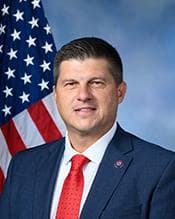
- Brad Finstad
- Cosponsors
- None
- Introduced
- In Committee
What this bill would do
The Conservation Reserve Program Modernization Act aims to amend the Food Security Act of 1985 to update the conservation reserve program. It introduces new definitions for terms like conservation buffer and eligible partner. The bill expands the types of land that can be included in the program, including specific cropland, grasslands, and marginal pasture land. It also outlines new cost-sharing payments for establishing vegetation and erosion control. Additionally, the Act modifies annual rental payments for multiple enrollments and sets new rental rate limitations based on soil capability classes.
Yes
Does this better protect air, water and wildlife?+7
The bill expands the types of land eligible for conservation, including buffers to address water quality and wildlife habitat concerns.
Does this invest in rural communities?+4
The bill provides cost-sharing for land improvements and supports livestock transitions in rural areas through expanded program eligibility.
The opposite
Would business owners be better off under this?-3
The bill imposes caps on rental rates and reduces annual rental payments for subsequent reenrollments, which may reduce income for land owners.
Would farmers be better off under this?-2
The bill reduces the rental payments received for repeated land reenrollments by decreasing the applicable percentage for each subsequent term.
Who it would affect, and how
Potential Positive Impacts for People
-
Cost-Sharing for Land Improvements: The Secretary will pay 50 percent of the costs for establishing permanent vegetation, erosion control, and installing fencing to protect riparian areas or facilitate livestock transitions (Section 4(a)).
-
Expansion of Eligible Land for Conservation: The bill allows for the inclusion of various land types such as grasslands, marginal pasture land, and cropland to be devoted to conservation buffers or wildlife habitat (Section 3(2)).
-
Habitat and Water Quality Protection: The bill provides for land to be used for practices that address significant water quality, water conservation, and wildlife habitat concerns (Section 3(4)).
-
Support for Grassland Uses: Certain grasslands can be included if they contain forbs or shrubland where grazing is the predominant use (Section 3(3)(A)).
Potential Negative Impacts for People
-
Reduced Rental Payments for Reenrollment: For land that is reenrolled, the annual rental payment may decrease over time, with the applicable percentage dropping by 10 percentage points for each subsequent reenrollment (Section 4(b)(1)(B)).
-
Rental Rate Limitations: The bill sets specific limits on the county average soil rental rate based on the land's capability class, which may limit the maximum rental rate for certain soil types (Section 4(b)(2)(E)).
Groups and Interests Ranking
Every group the model scored this bill for, from -10 to +10. Hover a score for the reason it gave.
- Environment Energy And Infrastructure
- Improves Environmental Protections+7Improves Rural Development+4
- Demographic And Interest Groups
- Good For Business Owners-3Good For Farmers-2
- 1/13/2026
- Referred to the Subcommittee on Conservation, Research, and Biotechnology.
- 12/3/2025
- Referred to the House Committee on Agriculture.
- Introduced in House