Bill · H.R. 6361· House(119-HR-6361)
Ban AI Denials in Medicare Act
- Introduced
- 12/2/2025
- Last activity
- 12/2/2025 — Referred to the Committee on Ways and Means, and in addition to the Committee on Energy and Commerce, for a period to be subsequently determined by the Speaker, in each case for consideration of such provisions as fall within the jurisdiction of the committee concerned.
- Sponsored by
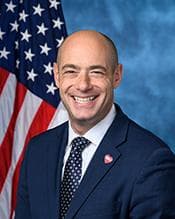
- Greg Landsman
- Cosponsors
- - 4 - 0
- Introduced
- In Committee
What this bill would do
This bill is called the Ban AI Denials in Medicare Act. It stops the Secretary of Health and Human Services from testing the WISeR model. It also changes title XI of the Social Security Act. This change bans the future implementation of payment models that test prior authorization under traditional Medicare. The ban includes the use of artificial intelligence. Officials introduced this to protect people in the program.
Yes· 3 of 6
Would people over 65 be better off under this?+6
The bill prevents the use of AI to implement prior authorization for Medicare parts A and B, protecting seniors' access to care.
Does this make health care easier to get in general?+5
The bill prevents the implementation of prior authorization requirements and AI-driven denials for Medicare Part A and B services.
Does this put more rules on large technology companies?+4
The bill restricts the use of artificial intelligence within the healthcare administrative process of Medicare prior authorization.
The opposite
Does this reduce what the federal government spends?-2
By preventing the implementation of the WISeR model and other prior authorization models, the bill may limit the government's ability to implement mechanisms intended to reduce wasteful spending.
Does this give the federal government more power?-2
The bill imposes specific limitations on the Secretary of Health and Human Services' authority to implement certain Medicare models.
Who it would affect, and how
Potential Positive Impacts for People
-
Section 2(a) stops the Secretary of Health and Human Services from implementing the WISeR model or any substantially similar model. This is positive because it blocks a specific prior authorization model that may affect regular services.
-
Section 2(b) stops the Secretary from selecting future models to be tested if those models provide for prior authorization, including through the use of artificial intelligence, for items or services under part A or part B. This is good for people because it prevents new hurdles and AI-based restrictions when trying to get Medicare coverage.
Potential Negative Impacts for People
- Based on the text provided, there are no negative consequences or burdens identified for individuals or groups of people in the United States.
Groups and Interests Ranking
Every group the model scored this bill for, from -10 to +10. Hover a score for the reason it gave.
- Demographic And Interest Groups
- Good For Seniors+6Good For Low Income Households+3
- Healthcare
- Improves Healthcare Access+5Increases Medicare Funding+3
- Education And Technology
- Increases Big Tech Regulation+4
- Social Issues And Justice
- Improves Social Security+3
- Economy And Finance
- Reduces Government Spending-2
- Governance And Ideology
- Increases Federal Power-2
- 9/21/2026
- 1 Cosponsor added.
- 1/7/2026
- 2 Cosponsors added.
- 12/2/2025
- Referred to the Committee on Ways and Means, and in addition to the Committee on Energy and Commerce, for a period to be subsequently determined by the Speaker, in each case for consideration of such provisions as fall within the jurisdiction of the committee concerned.
- 1 Cosponsor added.
- Introduced in House
 Jim Costa
Democrat · California
 Valerie Foushee
Democrat · North Carolina
 Adelita Grijalva
Democrat · Arizona
 Bonnie Watson Coleman
Democrat · New Jersey