Bill · H.R. 6309· House(119-HR-6309)
Cyber Deterrence and Response Act of 2025
- Introduced
- 11/25/2025
- Last activity
- 11/25/2025 — Referred to the Committee on Foreign Affairs, and in addition to the Committees on Financial Services, Oversight and Government Reform, and the Judiciary, for a period to be subsequently determined by the Speaker, in each case for consideration of such provisions as fall within the jurisdiction of the committee concerned.
- Sponsored by
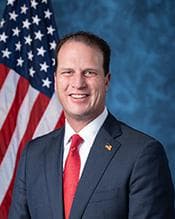
- August Pfluger
- Cosponsors
- None
- Introduced
- In Committee
What this bill would do
The Cyber Deterrence and Response Act of 2025 aims to impose sanctions on designated critical cyber threat actors. The President, through the National Cyber Director, can designate foreign persons or agencies responsible for state-sponsored cyber activities that threaten U.S. national security, the economy, or critical infrastructure. The bill establishes a National Attribution Framework to create a uniform process for identifying these threats. Once designated, these actors face various non-travel-related sanctions, such as the withdrawal of financial and security assistance. Additionally, the act includes travel-related sanctions, such as visa revocations and ineligibility for admission. The President also has the authority to impose sanctions on foreign countries that aid or direct these threat actors.
Yes· 3 of 8
Does this better protect the country from computer attacks?+8
The act establishes a National Attribution Framework to identify and sanction critical cyber threat actors.
Does this give people more control over their personal data?+6
The bill aims to prevent the theft of personal identifiers and sensitive data through cyber activities.
Does this strengthen ties with allied countries?+5
The bill encourages coordination with U.S. allies and partners to deter cyber threats.
The opposite
No question was scored the opposite.
Who it would affect, and how
Potential Positive Impacts for People
-
Protection of Critical Infrastructure: The bill targets actors who cause disruptions to computer networks or compromise services for entities in critical infrastructure sectors (Section 2(a)(1)(A)(i-ii)).
-
Safeguarding Economic and Personal Data: It seeks to prevent the misappropriation of trade secrets, personal identifiers, health, or financial information used for commercial advantage or private gain (Section s2(a)(1)(A)(iv)).
-
Stabilizing Financial and Energy Sectors: The designation process targets those attempting to destabilize the financial sector or disrupt the energy sector through data or equipment tampering (Section 2(a)(1)(A)(v-vi)).
-
Protecting Democratic Processes: The bill addresses those who attempt to interfere with or undermine election processes or government institutions (Section 2(a)(1)(A)(vii)).
-
Establishment of Evidence Standards: The creation of a National Attribution Framework aims to establish uniform, criteria-based processes and technical standards for evaluating cyber activities (Section 2(a)(2)(A-B)).
Potential Negative Impacts for People
-
Restrictions on Financial Activities: Designated persons may face prohibitions on purchasing or selling publicly traded securities or investing in significant amounts of equity or debt (Section 2(b)(2)(E)).
-
Loss of Financial Support: The President can authorize the withdrawal, limitation, or suspension of United States development and security assistance (Section 2(b)(2)(A-B)).
-
Restrictions on Trade and Procurement: Sanctions may prohibit U.S. agencies from procuring goods, technology, or services from designated persons, or prohibit those persons from participating in transactions involving items subject to the Export Administration Regulations (Section 2(b)(2)(F-H)).
-
Travel Restrictions and Visa Revocations: Designated aliens are considered inadmissible to the United States and are ineligible for visas, and any existing visas will be revoked immediately (Section 2(c)(1-2)).
-
Impacts on Foreign Countries: The President can impose sanctions on entire governments that have aided or directed a designated threat actor, including withdrawing assistance or blocking exports (Section 2(d)).
Groups and Interests Ranking
Every group the model scored this bill for, from -10 to +10. Hover a score for the reason it gave.
- National Security And Foreign Policy
- Improves Cybersecurity Defense+8Improves International Alliances+5
- Education And Technology
- Improves Data Privacy+6
- Demographic And Interest Groups
- Good For Business Owners+5
- Economy And Finance
- Improves Consumer Protection+5
- Social Issues And Justice
- Improves Voting Access+4
- Governance And Ideology
- Improves Government Transparency+3
- Environment Energy And Infrastructure
- Improves Rural Development+2
- 11/25/2025
- Referred to the Committee on Foreign Affairs, and in addition to the Committees on Financial Services, Oversight and Government Reform, and the Judiciary, for a period to be subsequently determined by the Speaker, in each case for consideration of such provisions as fall within the jurisdiction of the committee concerned.
- Introduced in House