Bill · H.R. 6263· House(119-HR-6263)
No Free Pass for Felons Act of 2025
- Introduced
- 11/21/2025
- Last activity
- 11/24/2025 — Referred to the Subcommittee on Counterterrorism and Intelligence.
- Sponsored by
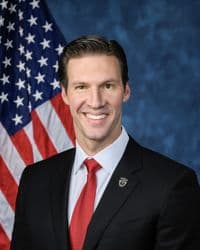
- Pat Harrigan
- Cosponsors
- - 1 - 0
- Introduced
- In Committee
What this bill would do
The ``No Free Pass for Felons Act of 2025'' aims to amend various federal laws to restrict eligibility for certain law enforcement and public safety grants. This bill links federal funding to specific pretrial public safety standards regarding individuals charged with violent offenses. Under the act, states or local governments must implement laws prohibiting pretrial release on personal recognizance or unsecured bonds for certain defendants without a dangerousness hearing. It also requires these jurisdictions to collect and publish annual data on judicial release decisions, rearrests, and failure to appear. Failure to meet these requirements can lead to a reduction in grant awards.
Yes
Does this make what the government does easier for the public to see?+4
The bill requires jurisdictions to collect and publish annual data on judicial release decisions and rearrests.
Does this change how police departments operate?+3
The bill mandates stricter judicial oversight and data collection requirements for violent crime defendants.
Would people in cities be better off under this?+2
The bill aims to increase public safety through more rigorous judicial review of violent offenders.
The opposite· 3 of 4
Would households on low incomes be better off under this?-3
The bill's stricter pretrial detention requirements may disproportionately affect low-income individuals who cannot afford bail.
Would Black Americans be better off under this?-3
The expansion of pretrial detention requirements may disproportionately impact Black Americans subject to the judicial system.
Does this reduce what the federal government spends?-2
The bill reduces federal grant allocations to states and local governments that fail to meet new pretrial standards.
Who it would affect, and how
Potential Positive Impacts for People
-
Increased Public Safety Standards: The bill requires a law or policy that prohibits pretrial release on personal recognizance or unsecured appearance bonds for "covered defendants" unless a court holds a dangerousness hearing and makes a written finding regarding the safety of the community (Section 3(a)(1)).
-
Improved Data Transparency: Jurisdictions would be required to maintain a system to collect and publish annual data concerning judicial release decisions, rearrests for violent offenses, and failures to appear (Section 3(a)(1)).
-
Judicial Oversight for Violent Offenders: By requiring a "dangerousness hearing" and a written finding on the record, the bill ensures that a court evaluates whether pretrial release will reasonably assure the defendant's appearance and the safety of the community (Section 3(a)(1)).
Potential Negative Impacts for People
-
Reduction in Federal Funding for Local Governments: If a State or local government fails to meet the new application requirements regarding pretrial release and data collection, the Attorney General may reduce grant awards to no more than 85 percent of the original amount (Section 3(a)(1)).
-
Impact on Public Transportation Agency Grants: To receive transit security grants, public transportation agencies must ensure their State has adopted specific laws regarding pretrial release and data collection, though a temporary waiver may be granted for acute site-specific security threats (Section 3(c)(1)).
Groups and Interests Ranking
Every group the model scored this bill for, from -10 to +10. Hover a score for the reason it gave.
- Demographic And Interest Groups
- Good For Urban Residents+2Good For African Americans-3Good For Low Income Households-3
- Governance And Ideology
- Improves Government Transparency+4
- Social Issues And Justice
- Improves Policing Reform+3
- Economy And Finance
- Reduces Government Spending-2
- Environment Energy And Infrastructure
- Improves Public Transit-2
- 11/24/2025
- Referred to the Subcommittee on Transportation and Maritime Security.
- Referred to the Subcommittee on Border Security and Enforcement.
- Referred to the Subcommittee on Counterterrorism and Intelligence.
- 11/21/2025
- Referred to the Committee on the Judiciary, and in addition to the Committee on Homeland Security, for a period to be subsequently determined by the Speaker, in each case for consideration of such provisions as fall within the jurisdiction of the committee concerned.
- 1 Cosponsor added.
- Introduced in House
 Troy Nehls
Republican · Texas