Bill · H.R. 6233· House(119-HR-6233)
Commercial Motor Vehicle English Proficiency Act
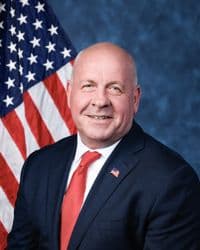
- Introduced
- 11/20/2025
- Last activity
- 11/21/2025 — Referred to the Subcommittee on Highways and Transit.
- Sponsored by
- David Taylor
- Cosponsors
- - 13 - 0
- Introduced
- In Committee
What this bill would do
This bill, titled the "Commercial Motor Vehicle English Proficiency Act," seeks to amend title 49 of the United States Code. It aims to modify provisions related to testing requirements for commercial motor vehicle operators. Specifically, it establishes new English language proficiency standards for those taking knowledge tests or seeking certification. Under this act, operators must demonstrate they can understand and communicate in English to effectively operate a vehicle. The changes include specific requirements for reading signs and communicating with various officials. Finally, it mandates that knowledge tests may only be administered in English.
Yes
Does this tighten control of the border?+3
The bill mandates that commercial drivers be able to communicate in English with border patrol agents.
The opposite
Would Hispanic Americans be better off under this?-5
Mandating that all knowledge tests be administered only in English may disproportionately impact Hispanic American commercial drivers.
Would immigrants be better off under this?-5
The bill imposes new English language proficiency requirements that could serve as a barrier to immigrants seeking commercial driving credentials.
Would households on low incomes be better off under this?-4
The new English proficiency requirements for commercial driving certifications may create barriers to employment for low-income, non-English speaking individuals.
Who it would affect, and how
Potential Positive Impacts for People
-
Improved Communication with Officials: The bill requires that individuals demonstrate the ability to communicate in English with traffic safety officers, border patrol agents, agricultural checkpoint officers, and cargo weight-limit station personnel (Section 2(a)(6)(A)(ii)). This could ensure more effective interactions during roadside stops or checkpoints.
-
Enhanced Operational Safety: The bill requires individuals to demonstrate the ability to understand basic information needed to operate a commercial motor vehicle, such as reading and understanding traffic signs in English (Section 2(a)(6)(A)(i)). This may assist in the effective operation of the vehicle.
-
Clearer Feedback Loops: The act requires that operators can provide and receive feedback and directions in English (Section 2(a)(6)(A)(iii)). This could lead to better communication regarding driving instructions or feedback during operation.
Potential Negative Impacts for People
-
Language Barriers for Testing: Starting two years after enactment, a knowledge test in written, verbal, or automated format may not be administered in any language other than English (Section 2(a)(6)(A)(B)). This could impact individuals who are not proficient in English.
-
New Eligibility Requirements: An individual will not be eligible to pass a knowledge test or receive a certification of fitness to operate a commercial motor vehicle unless they demonstrate specific English language abilities (Section 2(a)(6)(A)). This adds new criteria that must be met to obtain or maintain credentials.
Groups and Interests Ranking
Every group the model scored this bill for, from -10 to +10. Hover a score for the reason it gave.
- Demographic And Interest Groups
- Good For Hispanic Americans-5Good For Immigrants-5Good For Low Income Households-4
- Social Issues And Justice
- Improves Border Security+3
- 3/4/2026
- 1 Cosponsor added.
- 3/3/2026
- 2 Cosponsors added.
- 2/4/2026
- 1 Cosponsor added.
- 11/21/2025
- Referred to the Subcommittee on Highways and Transit.
- 2 Cosponsors added.
- 11/20/2025
- Referred to the House Committee on Transportation and Infrastructure.
- 7 Cosponsors added.
- Introduced in House
One bill Congress.gov lists as related to this one — companions in the other chamber, earlier versions, and bills this one absorbed or was folded into.
 Nicholas Begich
Republican · Alaska
 Sheri Biggs
Republican · South Carolina
 Earl Carter
Republican · Georgia
 Paul Gosar
Republican · Arizona
 Harriet Hageman
Republican · Wyoming
 Tracey Mann
Republican · Kansas
 Mary Miller
Republican · Illinois
 Barry Moore
Republican · Alabama
 Mark Messmer
Republican · Indiana
 W. Steube
Republican · Florida
 Derek Schmidt
Republican · Kansas
 Thomas Tiffany
Republican · Wisconsin
 Derrick Van Orden
Republican · Wisconsin