Bill · H.R. 6205· House(119-HR-6205)
Taos Pueblo Indian Water Rights Settlement Amendments Act of 2025
- Introduced
- 11/20/2025
- Last activity
- 11/20/2025 — Referred to the House Committee on Natural Resources.
- Sponsored by
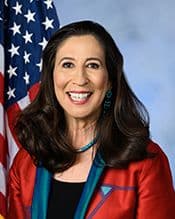
- Teresa Leger Fernandez
- Cosponsors
- None
- Introduced
- In Committee
What this bill would do
This bill, known as the Taos Pueblo Indian Water Rights Settlement Amendments Act of 2025, aims to amend existing law to help implement the Taos Pueblo Indian Water Rights Settlement Agreement. It establishes new supplemental trust funds for groundwater development and surface water sharing. The legislation also provides for financial assistance to non-Pueblo entities for mutual-benefit projects, including a mitigation well system. Additionally, it creates a supplemental fund for these projects to ensure they are completed. The act includes mandatory appropriations and mechanisms to adjust for construction cost fluctuations.
Yes· 3 of 5
Would Native Americans be better off under this?+8
The bill establishes supplemental trust funds specifically for the Taos Pueblo to implement their water rights settlement through infrastructure development.
Does this invest in rural communities?+5
The bill funds the development of critical water infrastructure and treatment systems for the Taos Pueblo and surrounding entities.
Would people in rural areas be better off under this?+4
The bill funds water treatment and distribution infrastructure essential for rural community stability.
The opposite
Does this reduce what the federal government spends?-1
The bill mandates significant new appropriations for water infrastructure and mutual-benefit projects.
Who it would affect, and how
Potential Positive Impacts for People
-
Infrastructure Development for the Pueblo: The bill establishes the Taos Pueblo Groundwater Development Supplemental Trust Fund and the Taos Pueblo Surface Water Sharing Supplemental Trust Fund. These allow the Pueblo to pay for or reimburse costs related to investigating, planning, and constructing essential water infrastructure (Section 3, subsections (h) and (i)).
-
Financial Assistance for Mutual-Benefit Projects: The Secretary of the Interior, through the Commissioner of Reclamation, can provide grants, contracts, or financial assistance to Eligible Non-Pueblo Entities for projects like water treatment (Section 4, subsection (c)(1)).
-
Adjustable Funding to Combat Inflation: The bill includes provisions to adjust mandatory appropriations based on changes in construction costs and unforeseen market volatility. This helps ensure that projects remain funded even if prices rise (Section 5, subsections (k), (l), and (m)).
-
Flexible Solutions for Water Depletion: The bill allows for the creation of "alternative or interim offset infrastructure" to address surface water depletion effects. This can be built either on Pueblo lands or off Pueblo lands to ensure compliance with the Settlement Agreement (Section 4, subsection (c)(5)).
Potential Negative Impacts for People
-
Strict Deadlines and Funding Risks: Eligible Non-Pueblo Entities must meet specific deadlines for spending funds and completing construction. If these deadlines are not met, the Commissioner of Reclamation has the authority to terminate the grant or contract and require the return of unexpended funds (Section 4, subsection (c)(3)).
-
Risk of Project Failure for Non-Compliant Entities: If an entity fails to meet deadlines, the government can take the funding away and award it to another entity or a third party instead (Section 4, subsection (c)(4)).
Groups and Interests Ranking
Every group the model scored this bill for, from -10 to +10. Hover a score for the reason it gave.
- Demographic And Interest Groups
- Good For Native Americans+8Good For Rural Residents+4Good For Business Owners+1
- Environment Energy And Infrastructure
- Improves Rural Development+5
- Economy And Finance
- Reduces Government Spending-1
- Social Issues And Justice
- Improves Poverty Reduction+1
- 11/20/2025
- Referred to the House Committee on Natural Resources.
- Introduced in House
One bill Congress.gov lists as related to this one — companions in the other chamber, earlier versions, and bills this one absorbed or was folded into.