Bill · H.R. 6175· House(119-HR-6175)
End Cashless Bail to Protect Americans Act of 2025
- Introduced
- 11/20/2025
- Last activity
- 11/20/2025 — Referred to the Committee on the Judiciary, and in addition to the Committee on Education and Workforce, for a period to be subsequently determined by the Speaker, in each case for consideration of such provisions as fall within the jurisdiction of the committee concerned.
- Sponsored by
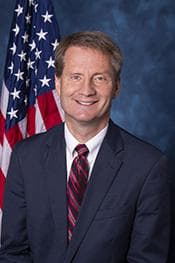
- Tim Burchett
- Cosponsors
- None
- Introduced
- In Committee
What this bill would do
The "End Cashless Bail to Protect Americans Act of 2025" aims to prohibit Federal funding to States and local governments that allow certain types of pre-trial release. Specifically, it targets entities that permit release on personal recognizance or through an unsecured appearance bond. The Attorney General is tasked with identifying these entities and providing a list to Federal agency heads. Once identified, Federal agencies must terminate funding from covered grant programs to those specific governments. Funding can be reinstated once the Attorney General removes the entity from the list.
Yes
Does this reduce what the federal government spends?+5
The bill reduces federal spending by terminating funds for specific state and local government grant programs.
The opposite· 3 of 9
Would students be better off under this?-7
The bill terminates Pell grants for incarcerated students.
Does this make college cost less?-7
The bill terminates Pell grants awarded to eligible incarcerated students.
Would households on low incomes be better off under this?-5
The bill reduces funding for Legal Services Corporation and workforce development programs that support low-income individuals.
Who it would affect, and how
Potential Positive Impacts for People
- Financial Accountability: By targeting pre-trial release methods like personal recognizance or unsecured appearance bonds, the bill seeks to change how local governments handle bail (Section 2(a)).
Potential Negative Impacts for People
-
Loss of Federal Grant Funding: States or local governments that permit pre-trial release on personal recognizance or unsecured appearance bonds would face the termination of funds from various covered grant programs (Section 2(a) and Section 2(b)(2)).
-
Impact on Education and Workforce Programs: The bill includes the termination of Pell grants awarded to eligible incarcerated students and funding from the Workforce Innovation and Opportunity Act (Section 2(d)(1)(E) and Section 2(d)(1)(F)).
-
Impact on Child Welfare and Legal Services: Funding could be terminated for programs established under the Child Abuse Prevention and Treatment Act, the Victim of Child Abuse Act of 1990, and grant programs administered by the Legal Services Corporation (Section 2(d)(1)(G), (H), and (I)).
-
Impact on Justice and Crime Control Programs: The bill would terminate funding for programs established under the Omnibus Crime Control and Safe Streets Act of 1968 and the Violent Crime Control and Law Enforcement Act of 1994 (Section 2(d)(1)(A), (B), and (D)).
Groups and Interests Ranking
Every group the model scored this bill for, from -10 to +10. Hover a score for the reason it gave.
- Demographic And Interest Groups
- Good For Students-7Good For Low Income Households-5Good For Children-4
- Social Issues And Justice
- Improves Poverty Reduction-5Improves Childcare Affordability-4Improves Policing Reform-3Improves Disability Rights-2
- Education And Technology
- Improves College Affordability-7
- Economy And Finance
- Reduces Government Spending+5Increases Job Creation-5
- 11/20/2025
- Referred to the Committee on the Judiciary, and in addition to the Committee on Education and Workforce, for a period to be subsequently determined by the Speaker, in each case for consideration of such provisions as fall within the jurisdiction of the committee concerned.
- Introduced in House