Bill · H.R. 6174· House(119-HR-6174)
Ending Crime and Disorder on America’s Streets Act
- Introduced
- 11/20/2025
- Last activity
- 11/20/2025 — Referred to the Committee on the Judiciary, and in addition to the Committees on Energy and Commerce, and Financial Services, for a period to be subsequently determined by the Speaker, in each case for consideration of such provisions as fall within the jurisdiction of the committee concerned.
- Sponsored by
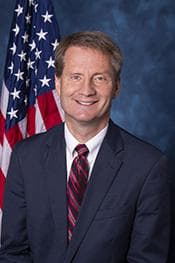
- Tim Burchett
- Cosponsors
- - 1 - 0
- Introduced
- In Committee
What this bill would do
The "Ending Crime and Disorder on America's Streets Act" aims to improve public safety by addressing homelessness and street disorder. The bill focuses on restoring civil commitment procedures and utilizing institutional treatment in hospitals or asylums for those unable to care for themselves. It directs several Federal agencies to assess and prioritize grant programs for states and municipalities that enforce prohibitions on urban camping, squatting, and public drug use. Additionally, the act seeks to redirect Federal resources toward treatment-based methods rather than "housing first" policies. It also establishes stricter oversight for housing assistance programs and the management of individuals with serious mental illness or substance use disorders.
Yes· 3 of 4
Would people in cities be better off under this?+4
The bill aims to increase public safety by reducing urban camping, squatting, and public drug use.
Does this make mental health care easier to get?+4
The bill promotes institutional treatment, civil commitment, and crisis intervention for those with serious mental illness.
Is this likely to reduce homelessness?+3
The bill aims to reduce visible homelessness by enforcing prohibitions on urban camping, squatting, and loitering.
The opposite· 3 of 10
Does this make housing cost less?-5
The bill moves away from 'housing first' models which are a primary method of providing affordable housing to the unhoused.
Does this protect people from being watched or searched?-5
The bill allows for the collection of health-related data from assistance recipients to be shared with law enforcement.
Does this expand the rights of people with disabilities?-4
The bill facilitates the civil commitment of individuals with mental health issues which may impact their autonomy.
Who it would affect, and how
Potential Positive Impacts for People
-
Restoring Public Safety and Order: By encouraging the enforcement of prohibitions on urban camping, loitering, and squatting, the bill seeks to address disorder on the streets (Section 4(a)).
-
Increased Treatment Options: The bill promotes the use of civil commitment, institutional treatment, and step-down treatment to help unhoused individuals receive appropriate care (Section 2, Section 3(2)).
-
Improved Support for Individuals with Mental Illness: The act directs the assessment of Federal resources to ensure detainees with serious mental illness are not released due to lack of bed capacity in jails or hospitals (Section 4(b)(3)).
-
Targeted Assistance for Women and Children: The bill allows for federally funded programs to exclusively house women and children and aims to prevent sex offenders from being housed with unrelated children (Section 6(d)).
-
Enhanced Health Services: The bill encourages Federally qualified health centers and community behavioral health clinics to support comprehensive services, including crisis intervention, for those with serious mental illness or substance use disorders (Section 5(a)(3)).
Potential Negative Impacts for People
-
Increased Civil Commitment: The bill seeks to reverse judicial precedents and terminate consent decrees to encourage the civil commitment of unhoused individuals (Section 3(1)).
-
Ending Certain Support Models: The act calls for ending support for "housing first" policies, which currently focus on providing housing before addressing other needs (Section 6(a)(1)).
-
Restrictions on Grant Funding: Federal grants may be withheld from programs that utilize harm reduction or safe consumption efforts (Section 5(a)(1)).
-
Potential Penalties for Housing Recipients: Recipients of Federal assistance that operate drug injection or safe consumption sites may face civil or criminal actions or a freeze on their assistance (Section 6(c)).
-
Increased Data Collection: The bill allows for the collection of health-related information from those receiving assistance, which may be shared with law enforcement authorities (Section 6(e)).
Groups and Interests Ranking
Every group the model scored this bill for, from -10 to +10. Hover a score for the reason it gave.
- Social Issues And Justice
- Reduces Homelessness+3Improves Affordable Housing-5Improves Disability Rights-4Improves Poverty Reduction-3Improves Policing Reform-2
- Governance And Ideology
- Improves Privacy Rights-5Improves Government Transparency-2
- Demographic And Interest Groups
- Good For Urban Residents+4Good For Women+3Good For Low Income Households-4
- Economy And Finance
- Reduces Government Spending-2
- Healthcare
- Improves Mental Health Access+4Improves Healthcare Access-3Improves Opioid Crisis Response-2
- 4/22/2026
- 1 Cosponsor added.
- 11/20/2025
- Referred to the Committee on the Judiciary, and in addition to the Committees on Energy and Commerce, and Financial Services, for a period to be subsequently determined by the Speaker, in each case for consideration of such provisions as fall within the jurisdiction of the committee concerned.
- Introduced in House
 Nancy Mace
Republican · South Carolina