Bill · H.R. 6133· House(119-HR-6133)
Jumpstart on College Act
- Introduced
- 11/19/2025
- Last activity
- 11/19/2025 — Referred to the House Committee on Education and Workforce.
- Sponsored by
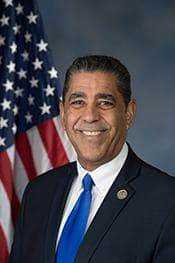
- Adriano Espaillat
- Cosponsors
- - 1 - 0
- Introduced
- In Committee
What this bill would do
The Jumpstart on College Act directs the Secretary of Education to provide grants to support early college high schools and dual or concurrent enrollment programs. The bill aims to increase the percentage of students, particularly low-income and underrepresented populations, who complete recognized postsecondary credentials within a timely manner. Funding is authorized at $250,000,000 for fiscal year 2026 and each of the following five years. Grants are awarded to both eligible entities, such as institutions of higher education in partnership with local agencies, and to States. The legislation includes specific requirements for matching funds and mandatory activities to ensure program success.
Yes· 3 of 9
Would students be better off under this?+8
The bill provides direct financial relief and support services for postsecondary education success.
Would households on low incomes be better off under this?+7
The bill specifically targets low-income students to offset the costs of tuition, fees, and support services.
Does this make college cost less?+7
The bill provides grants to ensure students do not pay tuition or fees for participating in early college programs.
The opposite
No question was scored the opposite.
Who it would affect, and how
Potential Positive Impacts for People
-
Increased College Completion Rates: The act aims to help more students, including low-income and underrepresented populations, complete postsecondary credentials within the expected timeframe (Section 2).
-
Financial Relief for Students: Grantees are required to ensure that participating students are not required to pay tuition or fees for postsecondary courses taken under the program (Section 5(i)(3)(A)).
-
Enhanced Support Services: Funds can be used to create systems of support for students, including academic, social, and college/career readiness services (Section 5(h)(1)(A)(ii)).
-
Access to Work-Based Learning: The bill allows for the incorporation of work-based learning opportunities, such as internships and pre-apprenticeships, into the programs (Section 5(h)(2)(C)).
-
Improved Career Readiness: Funds can be used to design curricula that align with labor market demand through partnerships with employers (Section 5(h)(1)(B)(i)).
-
Expanded Access for Underrepresented Groups: States may use funds to establish mechanisms to offset costs for tuition, fees, and support services specifically for low-income and underrepresented students (Section 6(a)(2)(A)).
Potential Negative Impacts for People
-
Financial Burden of Matching Funds for Entities: Eligible entities must provide matching funds that increase over the life of the grant, starting at 20 percent and rising to 50 percent by the sixth year (Section 5(d)(2)).
-
Financial Burden of Matching Funds for States: States are required to provide non-Federal funds equal to 50 percent of the amount of the grant they receive (Section 6(d)).
-
Requirement to Supplement Rather Than Supplant: Entities and States must ensure that these federal funds are used only to add to existing funds and not to replace money that would otherwise be available from other sources (Section 5(e) and Section 6(e)).
Groups and Interests Ranking
Every group the model scored this bill for, from -10 to +10. Hover a score for the reason it gave.
- Demographic And Interest Groups
- Good For Students+8Good For Low Income Households+7Good For Children+5Good For Young Adults+5Good For Hispanic Americans+3Good For Middle Class Households+3
- Education And Technology
- Improves College Affordability+7Improves Student Loan Relief+2
- Social Issues And Justice
- Improves Racial Equity+4
- 11/19/2025
- Referred to the House Committee on Education and Workforce.
- 1 Cosponsor added.
- Introduced in House
One bill Congress.gov lists as related to this one — companions in the other chamber, earlier versions, and bills this one absorbed or was folded into.
 Mark Takano
Democrat · California