Bill · H.R. 6129· House(119-HR-6129)
Bidirectional Electric Vehicle Charging Act of 2025
- Introduced
- 11/19/2025
- Last activity
- 11/20/2025 — Referred to the Subcommittee on Economic Development, Public Buildings, and Emergency Management.
- Sponsored by
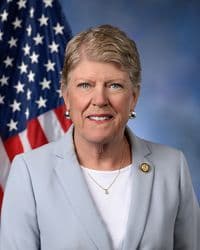
- Julia Brownley
- Cosponsors
- None
- Introduced
- In Committee
What this bill would do
The Bidirectional Electric Vehicle Charging Act of 2025 requires the Secretary of Energy to create a National Electric Vehicle Bidirectional Charging Roadmap. This roadmap must include a strategy, obstacles, key actions for Congress, and cost estimates for various development paces. Additionally, the Secretary of Energy must establish technical standards and require that new electric vehicles, including light-duty motor vehicles and school buses, be capable of bidirectional charging starting in model year 2029. The Act also establishes civil penalties for those who violate these new regulations. Finally, it directs FEMA to require that state or local hazard mitigation plans incorporate bidirectional charging capabilities.
Yes· 3 of 9
Does this improve help for people hit by a disaster?+5
The bill directs FEMA to require that hazard mitigation plans incorporate bidirectional charging capabilities for disaster recovery.
Does this put more money into wind, solar and other renewable power?+4
By standardizing bidirectional charging, the bill supports the integration of electric vehicles into the broader energy grid.
Does this improve buses, trains and other public transport?+3
The requirement includes school buses, which can provide energy back to the grid during or after transit service.
The opposite
Would business owners be better off under this?-3
Manufacturers face new regulatory requirements and significant civil penalties for noncompliance.
Does this make it easier to run a small business?-2
The establishment of new technical standards and potential civil penalties may pose compliance burdens on smaller manufacturers.
Who it would affect, and how
Potential Positive Impacts for People
-
Standardized Technology: The Secretary of Energy will establish technical standards for manufacturers to standardize bidirectional charging technology (Section 3(a)(1)). This helps ensure consistency in how technology works.
-
Increased Vehicle Capabilities: Beginning in model year 2029, all new electric vehicles, including school buses and light-duty motor vehicles, must be capable of bidirectional charging (Section 3(a)(2)). This allows vehicles to provide energy to an external load when paired with capable equipment (Section 5(1)).
-
Disaster Recovery: Hazard mitigation plans submitted by States or local governments will be required to incorporate bidirectional charging capabilities (Section 4).
-
Public Transparency: The National Electric Vehicle Bidirectional Charging Roadmap must be made available to the public via the Department of Energy website (Section 2(b)).
Potential Negative Impacts for People
-
Financial Penalties for Noncompliance: Individuals or entities that violate regulations regarding technical standards or bidirectional charging requirements can be fined up to $21,000 per violation, with a maximum penalty of $105,000,000 for a related series of violations (Section 3(b)(1)).
-
Development Costs: The Secretary of Energy must estimate the costs of increasing the development and use of bidirectional charging at slow, moderate, or fast paces (Section 2(a)(4)).
Groups and Interests Ranking
Every group the model scored this bill for, from -10 to +10. Hover a score for the reason it gave.
- Environment Energy And Infrastructure
- Improves Disaster Relief And F E M A+5Increases Renewable Energy Investment+4Improves Public Transit+3
- Governance And Ideology
- Improves Government Transparency+3
- Economy And Finance
- Increases Job Creation+3Improves Fiscal Responsibility+1Improves Small Business Support-2
- Demographic And Interest Groups
- Good For Low Income Households+2Good For Urban Residents+2Good For Business Owners-3
- Education And Technology
- Increases Scientific Research Funding+1
- 11/20/2025
- Referred to the Subcommittee on Economic Development, Public Buildings, and Emergency Management.
- 11/19/2025
- Referred to the Committee on Energy and Commerce, and in addition to the Committee on Transportation and Infrastructure, for a period to be subsequently determined by the Speaker, in each case for consideration of such provisions as fall within the jurisdiction of the committee concerned.
- Introduced in House