Bill · H.R. 6097· House(119-HR-6097)
Transition Improvement by Estimating Risk Act of 2025
- Introduced
- 11/18/2025
- Last activity
- 11/18/2025 — Referred to the House Committee on Armed Services.
- Sponsored by
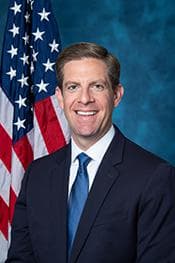
- Mike Levin
- Cosponsors
- - 0 - 1
- Introduced
- In Committee
What this bill would do
This bill, known as the ``TIER Act of 2025'', proposes amendments to title 10 of the United States Code. It seeks to change how pathways are designed within the Transition Assistance Program. Specifically, it aims to establish additional factors that must be considered during this process. These new factors involve various personal and professional circumstances of service members. The bill was introduced by Mr. Levin and Mr. Van Orden.
Yes· 3 of 4
Would veterans be better off under this, taking everything together?+5
The bill enhances veteran transition support by accounting for duty station location, family separation, and service tempo.
Does this increase the pay, pensions or support veterans receive?+4
The bill improves the transition assistance process for service members by incorporating personal and household circumstances into their exit pathways.
Does this make child care cost less?+3
The bill requires transition assistance pathways to consider a member's specific child care requirements.
The opposite
No question was scored the opposite.
Who it would affect, and how
Potential Positive Impacts for People
-
Consideration of childcare needs: The bill would require the program to look at the member's child care requirements, including if a dependent is in the Exceptional Family Member Program (Section 2, subparagraph M). This could help ensure transition plans account for family needs.
-
Review of household employment: The bill adds the employment status of other adults living in the member's household as a factor (Section 2, subparagraph N). This ensures the transition process considers the broader economic situation of the family.
-
Location and family separation awareness: The program would consider the member's duty station location and whether the member was separated from family while on duty (Section 2, subparagraph O). This acknowledges the personal impact of military service locations.
-
Accounting for service tempo: The bill includes the effects of operating tempo and personnel tempo on the member and their household (Section 2, subparagraph P). This allows the transition assistance to account for the physical and mental effects of military deployment and workload.
Potential Negative Impacts for People
- No specific negative impacts are mentioned in the provided text.
Groups and Interests Ranking
Every group the model scored this bill for, from -10 to +10. Hover a score for the reason it gave.
- Demographic And Interest Groups
- Good For Veterans+5Good For Low Income Households+2
- National Security And Foreign Policy
- Improves Veterans Benefits+4
- Social Issues And Justice
- Improves Childcare Affordability+3
- 11/18/2025
- Referred to the House Committee on Armed Services.
- 1 Cosponsor added.
- Introduced in House
 Derrick Van Orden
Republican · Wisconsin