Bill · H.R. 6092· House(119-HR-6092)
Constitutional Accountability Act
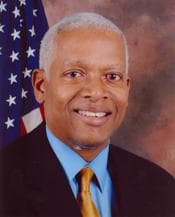
- Introduced
- 11/18/2025
- Last activity
- 11/18/2025 — Referred to the House Committee on the Judiciary.
- Sponsored by
- Henry Johnson
- Cosponsors
- - 4 - 0
- Introduced
- In Committee
What this bill would do
The Constitutional Accountability Act aims to ensure that the United States, States, and local governments are held liable for monetary damages resulting from constitutional violations by law enforcement officers. It amends section 1979 of the Revised Statutes (42 U.S.C. 1983) to expand the definition of a "person" to include various government entities. The bill establishes liability for these entities when an employee or contractor violates rights secured by the Constitution. Furthermore, it removes the requirement that a violation must result from a specific municipal policy or custom. Finally, it addresses sovereign immunity to allow for these legal claims against States and the United States.
Yes· 3 of 7
Does this change how police departments operate?+7
The bill increases accountability by establishing liability for government entities for the actions of law enforcement officers regardless of specific municipal policy.
Would Black Americans be better off under this?+6
The bill's findings highlight that expanded liability can help address historical and ongoing constitutional rights violations faced by Black Americans.
Does this narrow racial gaps in how people are treated?+6
The bill addresses systemic issues by making law enforcement entities liable for constitutional violations, which the findings suggest impacts Black Americans disproportionately.
The opposite
Does this reduce what the federal government spends?-4
The bill increases government liability by allowing monetary damage claims against the United States, States, and local governments.
Who it would affect, and how
Potential Positive Impacts for People
-
Increased Accountability for Law Enforcement: The bill establishes that a person or entity is liable for violations committed by an individual employed or contracted as a law enforcement officer, regardless of whether the officer was acting under a specific policy or custom (Section 3, subsection c).
-
Expanded Rights for Victims: The Act expands the definition of "person" to include the United States, States, local governments, and various government agencies or subdivisions, which provides a broader scope for those seeking legal recourse (Section 3, subsection a).
-
Removal of Legal Barriers for Lawsuits against States: The bill states that no State shall be immune from suit under the Eleventh Amendment or other doctrines of State sovereign immunity for the claims described in the Act (Section 3, subsection d).
-
Legal Recourse against Federal Officials: By amending the statute, the bill provides a statutory basis for claims regarding constitutional violations that previously lacked a statutory cause of action for Federal officials (Section 2, finding 10).
-
Incentivizing Better Training and Supervision: The bill suggests that making governments liable for the actions of their officers can incentivize them to more effectively hire, supervise, train, and discipline those officers (Section 2, finding 4 and 6).
Potential Negative Impacts for People
- Financial Liability for Governments: The bill makes the United States, States, and local governments liable for monetary damages for constitutional violations committed by their law enforcement officers or contractors (Section 3, subsection c).
Groups and Interests Ranking
Every group the model scored this bill for, from -10 to +10. Hover a score for the reason it gave.
- Demographic And Interest Groups
- Good For African Americans+6Good For Low Income Households+4Good For Urban Residents+3
- Social Issues And Justice
- Improves Policing Reform+7Improves Racial Equity+6
- Governance And Ideology
- Improves Due Process+6Improves Government Transparency+3
- Economy And Finance
- Reduces Government Spending-4
- 8/10/2026
- 1 Cosponsor added.
- 6/15/2026
- 3 Cosponsors added.
- 11/18/2025
- Referred to the House Committee on the Judiciary.
- Introduced in House
One bill Congress.gov lists as related to this one — companions in the other chamber, earlier versions, and bills this one absorbed or was folded into.
 Jesús García
Democrat · Illinois
 Ilhan Omar
Democrat · Minnesota
 Shri Thanedar
Democrat · Michigan
 Debbie Wasserman Schultz
Democrat · Florida