Bill · H.R. 5927· House(119-HR-5927)
Securing Reliable Power for Advanced Technologies Act
- Introduced
- 11/7/2025
- Last activity
- 11/7/2025 — Referred to the House Committee on Financial Services.
- Sponsored by
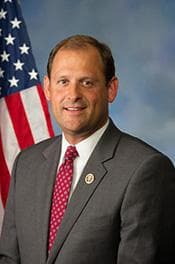
- Andy Barr
- Cosponsors
- None
- Introduced
- In Committee
What this bill would do
The "Securing Reliable Power for Advanced Technologies Act" amends the Defense Production Act of 1950 to speed up artificial intelligence (AI) infrastructure projects. It allows the President to designate specific AI data centers and their power sources as priority national defense projects. This designation streamlines federal permitting and provides a consolidated schedule for approvals. The bill also offers financial assistance, such as loans and loan guarantees, for power facilities supporting these projects. Additionally, it allows for certain exemptions from new emissions limits and provides monetary compensation to owners if federal regulations impair their operations.
Yes· 3 of 10
Would business owners be better off under this?+8
Provides loan guarantees, streamlined permitting, and government compensation for regulatory losses.
Would billionaires be better off under this?+8
Directly benefits owners of large AI data centers and energy facilities.
Would people in rural areas be better off under this?+7
Provides specific funding access for rural electric cooperatives to expand infrastructure.
The opposite· 3 of 13
Does this reduce how much oil, gas and coal is produced?-8
Directly supports and accelerates fossil fuel infrastructure like coal mines and gas facilities.
Does this cut the pollution that drives climate change?-7
Explicitly supports non-renewable baseload power, including coal and oil/gas, and allows exemptions from new emissions limits.
Does this better protect air, water and wildlife?-6
Streamlines permitting and allows the President to exempt projects from new environmental regulations.
Who it would affect, and how
Potential Positive Impacts for People
- Faster Infrastructure Development: The bill requires federal authorizations to be completed within 2 years, which accelerates the construction and expansion of AI and power facilities (Sec. 2(c)(2)).
- Financial Support for Utilities: Electric cooperatives and municipal utilities can receive loans and loan guarantees for up to 90 percent of project costs to preserve or expand power capacity (Sec. 2(h)(1), (3)).
- Support for Rural Areas: Rural electric cooperatives that qualify for USDA Rural Utilities Service funding can be designated as covered projects for AI infrastructure support (Sec. 2(j)).
- Regional Reliability: Priority for financial awards is given to facilities that materially improve regional reliability margins (Sec. 2(h)(4)(C)).
Potential Negative Impacts for People
- Environmental Risks: The President can exempt designated projects from new emissions limitations or operational requirements if they are deemed necessary for national defense (Sec. 2(f)).
- Limited Legal Recourse: Individuals or groups seeking to challenge a project designation must do so within a strict 60-day window, and the courts cannot issue preliminary injunctions unless the action is found to be arbitrary, capricious, or contrary to law (Sec. 2(e)(2), (4)).
- Taxpayer Burden: The U.S. government agrees to pay monetary compensation to project owners for losses in value or revenue caused by changes in federal statutes or regulations (Sec. 2(g)(1)).
- Reliance on Non-Renewables: The bill specifically defines critical infrastructure to include power facilities that do not derive their primary energy from intermittent renewable sources, including coal mines and oil and gas facilities (Sec. 2(a)(2)(B)(iii), (D)).
Groups and Interests Ranking
Every group the model scored this bill for, from -10 to +10. Hover a score for the reason it gave.
- Demographic And Interest Groups
- Good For Billionaires+8Good For Business Owners+8Good For Rural Residents+7Good For Union Workers+3
- Environment Energy And Infrastructure
- Improves Rural Development+6Reduces Fossil Fuel Production-8Reduces Carbon Emissions-7Improves Environmental Protections-6Increases Renewable Energy Investment-4Improves Public Land Management-2
- Governance And Ideology
- Increases Federal Power+7Improves Due Process-5Increase States Rights-3Improves Government Transparency-2
- Economy And Finance
- Improves Economic Growth+6Increases Job Creation+5Reduces Government Spending-5Improves Fiscal Responsibility-4Reduces National Debt-3
- Education And Technology
- Increases Scientific Research Funding+4Increases Big Tech Regulation-5
- National Security And Foreign Policy
- Improves Cybersecurity Defense+3Reduces Military Spending-3
- 11/7/2025
- Referred to the House Committee on Financial Services.
- Introduced in House