Bill · H.R. 5900· House(119-HR-5900)
SCAM Act
- Introduced
- 10/31/2025
- Last activity
- 10/31/2025 — Referred to the House Committee on Foreign Affairs.
- Sponsored by
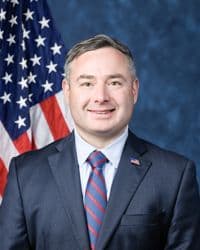
- Eugene Vindman
- Cosponsors
- - 0 - 1
- Introduced
- In Committee
What this bill would do
The "Stopping Cross-border Attacks and Manipulation Act" (SCAM Act) directs the Department of Defense to create a joint task force to investigate and stop transnational cybercrimes and foreign scam networks. This task force will include members from various federal agencies, state and local governments, and non-profit experts. It will prioritize investigating scam operations linked to the Chinese Communist Party in the Indo-Pacific region. The group is required to submit a report within one year detailing trends, recommending policy options like sanctions, and proposing ways to support affected people. The task force will also help implement the report's recommendations.
Yes· 3 of 18
Would people over 65 be better off under this?+9
The bill specifically identifies the elderly as a disproportionately targeted population for these scams.
Would retired people be better off under this?+9
Retirees are often among the elderly targeted by the scam networks the bill seeks to disrupt.
Does this better protect the country from computer attacks?+9
The core purpose of the bill is to disrupt transnational cybercrimes and protect data.
The opposite
Does this reduce what is spent on the military?-2
Establishment of a new DoD joint task force likely involves additional expenditures.
Who it would affect, and how
Potential Positive Impacts for People
-
Protection from Financial Loss: The bill establishes a task force to disrupt digital fraud schemes and scam networks that target U.S. citizens, which is positive because these scams cause significant financial losses (Section 3(a)(1)).
-
Support for Vulnerable Groups: The bill proposes a framework to support demographic groups disproportionately affected by scams and suggests using federal facilities, such as Social Security Administration offices and Post Offices, to share protective guidance (Section 3(c)(3)).
-
Data and Asset Security: The bill seeks policy options to protect the personal data and financial assets of Americans (Section 3(c)(2)(A)).
-
Combatting Human Trafficking: By investigating transnational organized crime groups that have trafficked individuals into "modern slavery" within scam operations, the bill addresses a humanitarian and human rights crisis (Section 2(8)).
Potential Negative Impacts for People
- No specific negative consequences or burdens for individuals or groups in the United States are explicitly mentioned in the provided text.
Groups and Interests Ranking
Every group the model scored this bill for, from -10 to +10. Hover a score for the reason it gave.
- Demographic And Interest Groups
- Good For Retirees+9Good For Seniors+9Good For Low Income Households+5Good For Middle Class Households+5Good For Billionaires+3Good For High Income Households+3Good For High Net Worth Individuals+3Good For Ultra High Net Worth Individuals+3Good For Veterans+2
- National Security And Foreign Policy
- Improves Cybersecurity Defense+9Improves International Alliances+6Improves Diplomatic Engagement+5Reduces Military Spending-2
- Economy And Finance
- Improves Consumer Protection+8Improves Economic Growth+3
- Governance And Ideology
- Improves Privacy Rights+7Increases Federal Power+4
- Education And Technology
- Improves Data Privacy+8
- Social Issues And Justice
- Improves Poverty Reduction+4
- 10/31/2025
- Referred to the House Committee on Foreign Affairs.
- 1 Cosponsor added.
- Introduced in House
 James Baird
Republican · Indiana