Bill · H.R. 5845· House(119-HR-5845)
Las Americas Energy Security Act
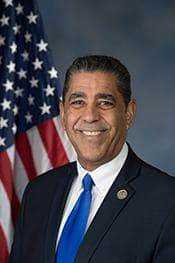
- Introduced
- 10/28/2025
- Last activity
- 10/28/2025 — Referred to the House Committee on Foreign Affairs.
- Sponsored by
- Adriano Espaillat
- Cosponsors
- None
- Introduced
- In Committee
What this bill would do
The Las Americas Energy Security Act aims to establish a sovereign lending program to assist Latin American and Caribbean partner countries with energy security. The bill seeks to support short-term energy needs and fund the transition to renewable or clean energy sources. It encourages United States public and private sector investment in regional energy infrastructure projects. The program provides for zero-interest or low-interest loans to eligible partner countries. Additionally, the act authorizes various forms of diplomatic, political, and project-based support to strengthen regional energy markets.
Yes· 3 of 16
Does this put more money into wind, solar and other renewable power?+9
The act specifically provides financing for renewable energy transitions and battery solutions.
Does this cut the pollution that drives climate change?+8
The bill prioritizes funding for renewable or clean energy projects and transitions to reduce carbon emissions.
Does this send more money or help to other countries?+7
The bill establishes a $100,000,000 annual sovereign lending program for Latin American and Caribbean partner countries.
The opposite
No question was scored the opposite.
Who it would affect, and how
Potential Positive Impacts for People
-
Improved Energy Access and Stability: The bill aims to help partner countries meet short-term energy needs and transition to renewable or clean energy (Section 3(a)(1-2)). It also includes financing for battery solutions to contribute to reliable and affordable electricity prices (Section 3(a)(5)).
-
Economic and Service Improvements: Reliable access to clean electricity can help governments improve basic services like education and healthcare, while also strengthening local economies (Section 2(a)(9)).
-
Job Creation: Loan applicants are required to provide data on how funds will support equitable job creation (Section 3(b)(2)).
-
Community Support: The bill prioritizes projects that improve energy access for marginalized and underserved communities (Section 4(b)(2)(A)(iii)).
-
Climate Resilience: The act promotes projects that address the impacts of sustained global temperature increases and enhance resilience to weather-related economic shocks (Section 4(b)(3)(B-C)).
Potential Negative Impacts for People
-
Risk of Economic Policy Constraints: While the bill states loans shall not require austerity measures that increase poverty or inequality (Section 3(d)(2)), it focuses on creating "competitive" and "solvent" energy markets (Section 2(c)(2)).
-
Restrictions on Foreign Partnerships: The bill strictly prohibits using funds to purchase commodities from or support corporations or state-owned enterprises with ownership relationships with the Government of the People's Republic of China, the Russian Federation, or other foreign adversaries (Section 3(b)(5) and Section 3(d)(3)).
Groups and Interests Ranking
Every group the model scored this bill for, from -10 to +10. Hover a score for the reason it gave.
- Environment Energy And Infrastructure
- Increases Renewable Energy Investment+9Reduces Carbon Emissions+8Improves Environmental Protections+4Improves Roads And Bridges+2
- Demographic And Interest Groups
- Good For Low Income Households+5Good For Rural Residents+5Good For Middle Class Households+3Good For Urban Residents+2
- National Security And Foreign Policy
- Increases Foreign Aid+7Improves International Alliances+6Improves Veterans Benefits+1
- Economy And Finance
- Increases Job Creation+5Improves Small Business Support+3
- Governance And Ideology
- Improves Government Transparency+4
- Social Issues And Justice
- Improves Poverty Reduction+4
- Education And Technology
- Increases Scientific Research Funding+3
- 10/28/2025
- Referred to the House Committee on Foreign Affairs.
- Introduced in House