Bill · H.R. 581· House(119-HR-581)
Child Care Workforce and Facilities Act of 2025
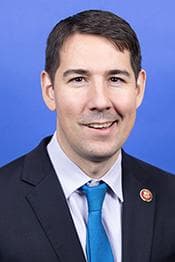
- Introduced
- 1/21/2025
- Last activity
- 1/21/2025 — Referred to the House Committee on Education and Workforce.
- Sponsored by
- Josh Harder
- Cosponsors
- - 2 - 1
- Introduced
- In Committee
What this bill would do
The Child Care Workforce and Facilities Act of 2025 aims to help States and Tribal entities expand the child care workforce and physical facilities. The bill establishes competitive grants for projects designed to increase access to quality child care, specifically targeting child care deserts. There are two types of grants available: workforce grants and facility grants. Workforce grants focus on helping individuals obtain credentials and career pathways in early childhood education. Facility grants support the construction, expansion, or renovation of child care locations. The act authorizes up to $100,000,000 for these purposes through fiscal years 2025 to 2031.
Yes· 3 of 7
Would children be better off under this?+7
The bill increases access to quality child care and addresses child care deserts.
Does this make child care cost less?+6
The bill specifically targets the affordability of child care through grant-funded projects.
Would households on low incomes be better off under this?+5
Increased child care availability and affordability helps low-income families.
The opposite
Does this reduce what the federal government spends?-1
The bill authorizes $100,000,000 in new federal spending for grants.
Who it would affect, and how
Potential Positive Impacts for People
-
Increased Child Care Access: The grants are intended to increase the availability of quality child care, specifically in "child care deserts," which are areas with a low supply of affordable options (Section 2(b)(1)).
-
Career Development for Workers: Workforce grants can help individuals obtain stackable and portable credentials in child care or early childhood education (Section 2(b)(2)(B)(i)).
-
Financial Assistance for Education: Grant funds can be used to help people pay for tuition, fees, textbooks, and required educational materials (Section 2(b)(3)(A)).
-
Support for Specific Demographics: The bill emphasizes outreach to people who do not have postsecondary degrees or cannot afford them, helping them enter career pathways (Section 2(b)(2)(B)(ii)).
-
Infrastructure Improvements: Facility grants can be used for the construction, expansion, or renovation of child care facilities, including licensed family child care homes (Section 2(b)(1)(B)(ii)).
Potential Negative Impacts for People
-
Grant Limitations: Grants are provided for a period of not more than 5 years (Section 2(b)(1)(C)).
-
Administrative Caps: There is a limit on how much of the grant can be used for administration, with no more than 10 percent of funds allowed for administrative costs (Section 2(b)(4)).
Groups and Interests Ranking
Every group the model scored this bill for, from -10 to +10. Hover a score for the reason it gave.
- Demographic And Interest Groups
- Good For Children+7Good For Low Income Households+5Good For Native Americans+5Good For Women+4
- Social Issues And Justice
- Improves Childcare Affordability+6
- Economy And Finance
- Increases Job Creation+5Reduces Government Spending-1
- Education And Technology
- Improves College Affordability+4
- 1/30/2026
- 1 Cosponsor added.
- 2/25/2025
- 1 Cosponsor added.
- 1/21/2025
- Referred to the House Committee on Education and Workforce.
- 1 Cosponsor added.
- Introduced in House
One bill Congress.gov lists as related to this one — companions in the other chamber, earlier versions, and bills this one absorbed or was folded into.
 Sarah Elfreth
Democrat · Maryland
 Brian Fitzpatrick
Republican · Pennsylvania
 Thomas Suozzi
Democrat · New York