Bill · H.R. 5750· House(119-HR-5750)
EQUALS Act of 2025
- Introduced
- 10/14/2025
- Last activity
- 4/9/2026 — Placed on the Union Calendar, Calendar No. 524.
- Sponsored by
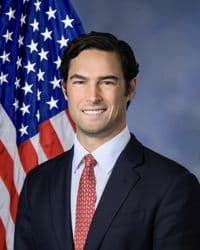
- Brandon Gill
- Cosponsors
- - 4 - 0
- Introduced
- On Calendar
What this bill would do
The Ensuring a Qualified Civil Service Act of 2025'' (or EQUALS Act of 2025'') seeks to change how federal employees are vetted through new timeframes. It modifies probationary periods for the competitive service and establishes new trial periods for the excepted service. For competitive service roles, the bill sets a 2-year probationary period, while preference eligible individuals serve 1 year. It also mandates that agency heads certify that an employee's continued employment advances the public interest. Additionally, the bill adjusts requirements for adverse actions based on length of employment.
Yes
Would veterans be better off under this, taking everything together?+5
The bill provides preference eligible individuals, such as veterans, with a shorter probationary period of 1 year compared to the 2-year period for others.
Does this make what the government does easier for the public to see?+2
The bill requires agencies to include specific terms regarding probationary periods and performance requirements in job announcements and offers.
The opposite
No question was scored the opposite.
Who it would affect, and how
Potential Positive Impacts for People
-
Clearer expectations for applicants: Agencies must include terms regarding probationary periods, training, and licenses in job announcements and offers (Section 2(e)(1)).
-
Timely information for employees: Employees are to receive timely notice regarding performance requirements that must be met to complete their probationary period (Section 2(e)(2)).
-
Guidance for managers: Supervisors and managers will receive periodic notifications regarding the end date of an employee's probationary period (Section 2(e)(3)).
-
Protection against administrative errors: If an agency head fails to certify an employee due to an administrative error, the employee can petition for reinstatement and may be entitled to backpay (Section 2(a)(5)).
-
Differentiation for preference eligible individuals: The bill provides a shorter probationary period of 1 year for preference eligible individuals compared to the 2-year period for others (Section 2(a)(1)(B) and Section 2(d)(2)).
Potential Negative Impacts for People
-
Longer wait for permanent status: Most individuals in the competitive service will not have a final appointment until after a 2-year probationary period (Section 2(a)(1)(A)).
-
Potential for termination at end of period: Employees may be terminated on the last day of their probationary period unless the agency head certifies that their employment advances the public interest (Section 2(a)(2)).
-
Extended requirements for certain roles: For positions requiring formal training or a license, the 2-year period begins only after the training is completed or the license is granted (Section 2(d)(1)).
-
New trial periods for excepted service: Individuals appointed to the excepted service must serve a 2-year trial period, or 1 year for preference eligible individuals (Section 3(a)(1) and Section 3(a)(2)).
-
Requirement to restart trial periods: Employees who separate from the civil service for more than 30 days and are reappointed to an excepted service position may have to complete a new trial period (Section 3(a)(3)).
Groups and Interests Ranking
Every group the model scored this bill for, from -10 to +10. Hover a score for the reason it gave.
- Demographic And Interest Groups
- Good For Veterans+5
- Governance And Ideology
- Improves Government Transparency+2
- 4/9/2026
- Reported (Amended) by the Committee on Oversight and Government Reform. H. Rept. 119-604.
- Placed on the Union Calendar, Calendar No. 524.
- 12/2/2025
- Committee Consideration and Mark-up Session Held
- Ordered to be Reported (Amended) by the Yeas and Nays: 24 - 19.
- 11/17/2025
- 1 Cosponsor added.
- 11/12/2025
- 1 Cosponsor added.
- 10/31/2025
- 1 Cosponsor added.
- 10/17/2025
- 1 Cosponsor added.
- 10/14/2025
- Referred to the House Committee on Oversight and Government Reform.
- Introduced in House
 James Comer
Republican · Kentucky
 Michael Cloud
Republican · Texas
 Pat Harrigan
Republican · North Carolina
 Barry Moore
Republican · Alabama