Bill · H.R. 5747· House(119-HR-5747)
Preventing Illegal Laboratories and Protecting Public Health Act of 2025
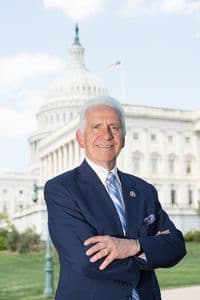
- Introduced
- 10/14/2025
- Last activity
- 10/14/2025 — Referred to the House Committee on Energy and Commerce.
- Sponsored by
- Jim Costa
- Cosponsors
- - 2 - 3
- Introduced
- In Committee
What this bill would do
The Preventing Illegal Laboratories and Protecting Public Health Act of 2025 establishes a program to track the movement of highly pathogenic agents. The Secretary of Health and Human Services will require covered distributors to maintain electronic logbooks detailing sales, leases, loans, or transfers of these agents. This includes collecting purchaser identification, intended use, and storage locations. Additionally, the bill mandates a strategic evaluation of high-containment laboratories in the United States. A designated Federal entity will oversee these evaluations, develop national standards, and maintain a Public Health Biosafety and Biosecurity Team. The act also directs a feasibility study regarding a database for existing high-containment laboratories.
Yes· 3 of 5
Does this make the country readier for the next outbreak?+6
The bill enhances biosecurity and tracking of highly pathogenic agents to better manage public health threats.
Does this make what the government does easier for the public to see?+3
The bill promotes transparency through a potential database of high-containment laboratory information accessible to officials.
Does this put more money into scientific research?+2
The bill creates new federal entities and teams to oversee laboratory safety and standards.
The opposite
Would business owners be better off under this?-3
Distributors face new regulatory requirements, electronic logbook maintenance, and potential criminal liabilities.
Does this make it easier to run a small business?-2
The bill imposes significant record-keeping and compliance burdens on distributors of highly pathogenic agents.
Who it would affect, and how
Potential Positive Impacts for People
-
Increased Oversight of Dangerous Pathogens: The requirement for covered distributors to maintain a logbook of the sale, lease, loan, or transfer of highly pathogenic agents ensures better tracking of dangerous materials (Section 2(a) and 2(c)).
-
Enhanced Security via Identification Requirements: By requiring purchasers to present a government-issued photo identification card and verify their information, the bill adds a layer of verification for those acquiring dangerous agents (Section 2(c)(3)).
-
Improved Laboratory Safety Standards: The mandate for a single Federal entity to conduct strategic evaluations of high-containment laboratories aims to assess their capacity to meet national biosafety and biosecurity goals (Section 3(a) and 3(b)).
-
Better Coordination for Local Officials: The creation of the Public Health Biosafety and Biosecurity Team provides a single point of contact for State, local, Tribal, and territorial agencies regarding laboratory biosafety and biosecurity issues (Section 3(d)).
-
Information Accessibility for Officials: The feasibility study for a database could allow Federal, State, local, Tribal, and territorial officials to access information regarding high-containment laboratory owners, addresses, and legal violations (Section 3(e)).
Potential Negative Impacts for People
-
Legal Risks for Purchasers: The bill notes that entering false statements or misrepresentations in the required logbook may subject purchasers to criminal penalties, including fines and imprisonment (Section 2(c)(4)).
-
Compliance Burdens for Distributors: Covered distributors are required to maintain detailed electronic logbooks for at least three years and must ensure successor entities assume responsibility for these records if ownership changes (Section 2(c)(5)).
-
Increased Regulation of High-Containment Laboratories: The evaluation process includes assessing the risks associated with expanding the number and facilities of high-containment laboratories (Section 3(b)).
Groups and Interests Ranking
Every group the model scored this bill for, from -10 to +10. Hover a score for the reason it gave.
- Healthcare
- Improves Pandemic Preparedness+6
- Demographic And Interest Groups
- Good For Business Owners-3
- Governance And Ideology
- Improves Government Transparency+3
- Economy And Finance
- Improves Small Business Support-2
- Education And Technology
- Increases Scientific Research Funding+2
- National Security And Foreign Policy
- Improves Cybersecurity Defense+1
- Social Issues And Justice
- Improves Poverty Reduction+1
- 4/9/2026
- 1 Cosponsor added.
- 2/9/2026
- 1 Cosponsor added.
- 2/4/2026
- 1 Cosponsor added.
- 12/5/2025
- 1 Cosponsor added.
- 10/21/2025
- 1 Cosponsor added.
- 10/14/2025
- Referred to the House Committee on Energy and Commerce.
- 1 Cosponsor added.
- Introduced in House
One bill Congress.gov lists as related to this one — companions in the other chamber, earlier versions, and bills this one absorbed or was folded into.
 Brian Fitzpatrick
Republican · Pennsylvania
 Vince Fong
Republican · California
 Kevin Kiley
Independent · California
 Susie Lee
Democrat · Nevada
 Dina Titus
Democrat · Nevada
 David Valadao
Republican · California