Bill · H.R. 5745· House(119-HR-5745)
Marine Fisheries Habitat Protection Act
- Introduced
- 10/14/2025
- Last activity
- 9/15/2026 — Ordered to be Reported in the Nature of a Substitute by the Yeas and Nays: 22 - 16.
- Sponsored by
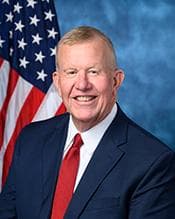
- Mike Ezell
- Cosponsors
- - 2 - 4
- Introduced
What this bill would do
The Marine Fisheries Habitat Protection Act aims to promote fish habitat by allowing certain offshore oil and gas platforms and pipelines to be used as artificial reefs. It amends the National Fishing Enhancement Act of 1984 to establish procedures for "Reefing in Place." This process includes assessments of marine life and economic benefits to determine if an inactive structure is eligible. Once approved, these structures can be left in place, partially removed, or toppled to create reef ecosystems. The bill also establishes a framework for transferring liability from applicants to State programs. Finally, it provides protections against certain removal orders during the reefing process.
Yes
Does this better protect air, water and wildlife?+5
The bill promotes fish habitat and the creation of artificial reef ecosystems.
Would business owners be better off under this?+4
The bill provides a framework for companies to decommission structures more efficiently by repurposing them.
The opposite
No question was scored the opposite.
Who it would affect, and how
Potential Positive Impacts for People
-
Enhancement of Fishing Opportunities: The bill defines artificial reefs as structures that enhance fishery resources and commercial and recreational fishing opportunities (Section 2, Definition 2).
-
Creation of Reef Ecosystems: The "Reef in Place" process aims to maximize reef ecosystems for benthic and pelagic species throughout the water column (Section 2, Definition 10(A)).
-
Economic Comparison Benefits: The assessment process requires a comparison of the costs of reefing versus the cost of replacing an inactive structure with equivalent artificial material (Section 2, Section 207(a)(2)(A)(ii)).
-
Liability Transfer to States: A State program may enter into an agreement to assume responsibility and liability for an approved structure, which may include an exchange of funds (Section 2, Section 207(c)(1)).
Potential Negative Impacts for People
-
Requirement for Financial Exchange: Under State programs, an applicant may have to pay a sum of money to a State to transfer responsibility and liability (Section 2, Section 207(c)(1)).
-
State Responsibility for Maintenance: Once a structure is accepted into a State Program, the State becomes solely responsible for continued maintenance and the maintenance of identifying markers (Section 2, Section 207(c)(2)(B)).
-
Restrictions on Removal Orders: The Secretary of the Interior is prohibited from issuing or enforcing removal orders during specific periods related to the reefing process, unless there is a substantial and imminent threat to navigational safety or the marine environment (Section 2, Section 5(e)(2)).
Groups and Interests Ranking
Every group the model scored this bill for, from -10 to +10. Hover a score for the reason it gave.
- Environment Energy And Infrastructure
- Improves Environmental Protections+5
- Demographic And Interest Groups
- Good For Business Owners+4
- 9/15/2026
- Subcommittee on Energy and Mineral Resources Discharged
- Committee Consideration and Mark-up Session Held
- Ordered to be Reported in the Nature of a Substitute by the Yeas and Nays: 22 - 16.
- 6/22/2026
- 1 Cosponsor added.
- 1/13/2026
- Subcommittee Hearings Held
- 1/7/2026
- Referred to the Subcommittee on Energy and Mineral Resources.
- 12/9/2025
- 1 Cosponsor added.
- 10/24/2025
- 2 Cosponsors added.
- 10/14/2025
- Referred to the House Committee on Natural Resources.
- 2 Cosponsors added.
- Introduced in House
 Troy Carter
Democrat · Louisiana
 Cleo Fields
Democrat · Louisiana
 Barry Moore
Republican · Alabama
 Marc Veasey
Democrat · Texas
 Eugene Vindman
Democrat · Virginia
 Randy Weber
Republican · Texas