Bill · H.R. 5743· House(119-HR-5743)
One Citizen, One Seat Act
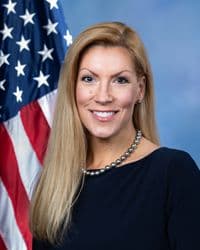
- Introduced
- 10/10/2025
- Last activity
- 10/10/2025 — Referred to the House Committee on Oversight and Government Reform.
- Sponsored by
- Beth Van Duyne
- Cosponsors
- None
- Introduced
- In Committee
What this bill would do
This bill, titled the ``One Citizen, One Seat Act'', directs the Secretary of Commerce to change how the 2020 census population is reported by State. The revision requires that the total population count includes only individuals who are citizens of the United States. Once the revised numbers are ready, the Secretary must send them to each State within 60 days. Furthermore, the bill imposes strict rules on how States use these new population figures. Specifically, it limits federal grant eligibility based on whether a State follows these new tabulation rules.
Yes
Does this give the federal government more power?+5
The bill expands federal authority by mandating how states must report and use population data to receive federal grants.
Does this tighten control of the border?+2
The bill emphasizes citizenship status in population reporting which aligns with stricter border and immigration oversight.
The opposite· 3 of 7
Would immigrants be better off under this?-6
The bill specifically excludes non-citizens from the decennial census population tabulation.
Would Hispanic Americans be better off under this?-5
The exclusion of non-citizens from census totals may disproportionately impact the representation and funding of states with large Hispanic populations.
Does this narrow racial gaps in how people are treated?-5
By excluding non-citizens from population counts, the bill may reduce the perceived scale of communities that are often more racially diverse.
Who it would affect, and how
Potential Positive Impacts for People
- Revised Population Reporting: The bill requires the Secretary of Commerce to revise the 2020 decennial census tabulation to include only United States citizens (Section 2(a)). This change focuses the population count strictly on citizens.
Potential Negative Impacts for People
-
Restrictions on Federal Grants: The bill states that no federal grant may be awarded to a State unless that State uses the new citizen-only population tabulation for all its usual purposes (Section 2(c)(1)). This could result in a loss of federal funding if a State does not comply with the new requirements.
-
Mandatory Use of Revised Data: States are prohibited from using any population data other than the revised citizen-only figures (Section 2(c)(2)). This limits the data available to a State for its various needs.
Groups and Interests Ranking
Every group the model scored this bill for, from -10 to +10. Hover a score for the reason it gave.
- Demographic And Interest Groups
- Good For Immigrants-6Good For Hispanic Americans-5Good For Low Income Households-4
- Social Issues And Justice
- Improves Border Security+2Improves Racial Equity-5Improves Pathway To Citizenship-4
- Economy And Finance
- Reduces Government Spending-3
- Governance And Ideology
- Increases Federal Power+5Improves Government Transparency-2
- 10/10/2025
- Referred to the House Committee on Oversight and Government Reform.
- Introduced in House