Bill · H.R. 5670· House(119-HR-5670)
Protecting America’s Roads Act
- Introduced
- 9/30/2025
- Last activity
- 12/1/2025 — Referred to the Subcommittee on Highways and Transit.
- Sponsored by
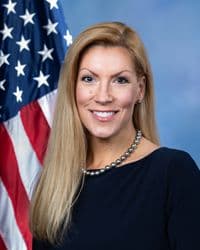
- Beth Van Duyne
- Cosponsors
- - 1 - 0
- Introduced
- In Committee
What this bill would do
The Protecting America's Roads Act seeks to amend title 49 of the United States Code regarding commercial driver's license requirements. It introduces new documentation requirements for citizenship, lawful permanent resident status, or work authorization. The bill also requires documentation of domicile in the state where the license is issued and mandates the use of the SAVE system for non-citizen applicants. Additionally, it sets expiration rules for non-citizen licenses and requires in-person actions for certain updates. Finally, the act directs the termination of reciprocity for foreign commercial driver's licenses and authorizes certain agencies to identify and report foreign nationals operating commercial motor vehicles unlawfully.
Yes
Does this tighten control of the border?+3
The bill empowers agencies to identify and report foreign nationals operating commercial vehicles unlawfully.
The opposite· 3 of 4
Would immigrants be better off under this?-5
The bill terminates foreign license reciprocity and requires non-citizens to complete renewals in person with shorter expiration dates.
Would Hispanic Americans be better off under this?-4
The bill imposes stricter verification and shorter expiration periods for non-citizen commercial driver's license holders.
Does this make it easier for immigrants already here to become citizens?-4
The bill imposes stricter documentation and expiration requirements on non-citizens seeking licenses.
Who it would affect, and how
Potential Positive Impacts for People
-
Verification of Legal Status: By requiring applicants to present valid documentation of citizenship, lawful permanent resident status, or work authorization, the bill aims to ensure compliance with status requirements (Section 2(a)(1)(C)).
-
State Residency Verification: The requirement to present valid documentation of domicile ensures that the individual is a resident of the state in which the license is being issued (Section 2(a)(1)(D)).
-
Enhanced Verification via SAVE System: Requiring States to use the SAVE system provides a mechanism to confirm the lawful presence of non-citizen applicants (Section 2(a)(6)).
-
Identification of Unlawful Operators: Agencies are authorized to use their authority to identify and address foreign nationals who are unlawfully operating commercial motor vehicles and report these instances (Section 4).
Potential Negative Impacts for People
-
Increased Requirements for Non-Citizens: Non-citizen applicants face stricter expiration rules, where their license or permit expires on the earlier of their I-94 date or one year after issuance (Section 2(a)(7)).
-
Inconvenience for License Updates: Non-citizens are required to complete any upgrade, downgrade, renewal, or transfer of a commercial driver's license or learner's permit in person (Section 2(a)(8)).
-
Risk of License Loss: States are required to downgrade or revoke a commercial driver's license or learner's permit if eligibility for such a license or permit lapses (Section 2(a)(9)).
-
Termination of Foreign License Recognition: The bill directs the termination of existing reciprocity agreements that recognize foreign commercial driver's licenses or allow holders of such licenses to operate commercial motor vehicles in the United States (Section 3).
Groups and Interests Ranking
Every group the model scored this bill for, from -10 to +10. Hover a score for the reason it gave.
- Demographic And Interest Groups
- Good For Immigrants-5Good For Hispanic Americans-4Good For Low Income Households-3
- Social Issues And Justice
- Improves Border Security+3Improves Pathway To Citizenship-4
- 12/1/2025
- Referred to the Subcommittee on Highways and Transit.
- 10/8/2025
- 1 Cosponsor added.
- 9/30/2025
- Referred to the Committee on Transportation and Infrastructure, and in addition to the Committee on the Judiciary, for a period to be subsequently determined by the Speaker, in each case for consideration of such provisions as fall within the jurisdiction of the committee concerned.
- Introduced in House
 Josh Brecheen
Republican · Oklahoma