Bill · H.R. 5602· House(119-HR-5602)
LAUNCH Act
- Introduced
- 9/26/2025
- Last activity
- 9/26/2025 — Referred to the House Committee on Science, Space, and Technology.
- Sponsored by
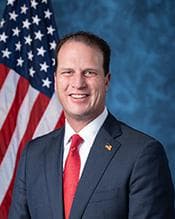
- August Pfluger
- Cosponsors
- - 0 - 1
- Introduced
- In Committee
What this bill would do
The LAUNCH Act aims to streamline regulations for commercial space launch, reentry, and private remote sensing space systems. It requires the Secretary of Transportation to evaluate the impact of current regulations to reduce delays and inefficiencies. The bill establishes an Aerospace Rulemaking Committee and a digital licensing system to track application statuses. It also creates the Commercial Space Transportation Administration within the Department of Transportation. Additionally, the Act mandates various reports and briefings to ensure transparency and efficiency in the licensing process.
Yes· 3 of 6
Would business owners be better off under this?+7
The act reduces regulatory uncertainty and provides personalized assistance to applicants in the commercial space industry.
Does this make what the government does easier for the public to see?+6
The bill mandates a new digital system for tracking application statuses and requires annual briefings to Congress.
Does this make it easier to run a small business?+5
The bill streamlines licensing processes and reduces regulatory delays for commercial space and remote sensing providers.
The opposite
No question was scored the opposite.
Who it would affect, and how
Potential Positive Impacts for People
-
Increased Efficiency for Spaceflight Industry: The Secretary must evaluate part 450 to identify and reduce operational delays and review timeline changes (Section 2(a)).
-
Industry Participation and Feedback: The creation of an Aerospace Rulemaking Committee allows established and emerging providers to participate in developing recommendations for regulatory amendments (Section 2(b)).
-
Support for Innovation: The Secretary is tasked with determining if license requirements can be modified or eliminated to encourage new technologies and operations (Section 2(c)).
-
Personalized Application Assistance: The bill requires the assignment of a licensing team lead to assist applicants in streamlining the review and approval process (Section 2(d)(2)).
-
Improved Transparency through Technology: A new digital licensing, permitting, and approval system will allow applicants to track their application status and receive electronic notifications (Section 3(a)).
-
Streamlined Remote Sensing Licensing: The bill directs the Secretary to minimize review timelines and provides for a dedicated licensing officer to assist with applications (Section 8(b)).
Potential Negative Impacts for People
-
Potential for Duplication of Efforts: There is a requirement to ensure the new Aerospace Rulemaking Committee does not duplicate the work of the Commercial Space Transportation Advisory Committee (Section 2(b)(2)).
-
Costs for System Development: The development of the digital licensing system may require up to $5,000,000 from available FAA funds (Section 3(b)).
Groups and Interests Ranking
Every group the model scored this bill for, from -10 to +10. Hover a score for the reason it gave.
- Demographic And Interest Groups
- Good For Business Owners+7
- Governance And Ideology
- Improves Government Transparency+6
- Economy And Finance
- Improves Small Business Support+5
- Education And Technology
- Increases Scientific Research Funding+3
- Environment Energy And Infrastructure
- Improves Public Transit+1
- National Security And Foreign Policy
- Improves Veterans Benefits+1
- 9/26/2025
- Referred to the House Committee on Science, Space, and Technology.
- 1 Cosponsor added.
- Introduced in House
One bill Congress.gov lists as related to this one — companions in the other chamber, earlier versions, and bills this one absorbed or was folded into.
 George Whitesides
Democrat · California