Bill · H.R. 5531· House(119-HR-5531)
Career and Technical Education Access Act
- Introduced
- 9/19/2025
- Last activity
- 9/19/2025 — Referred to the House Committee on Education and Workforce.
- Sponsored by
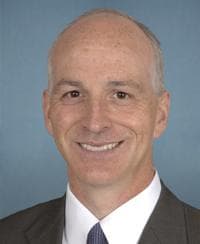
- Adam Smith
- Cosponsors
- None
- Introduced
- In Committee
What this bill would do
The Career and Technical Education Access Act creates a competitive grant program for State educational agencies to start or improve career and technical education (CTE) programs. These grants can fund the construction of schools, updated coursework, and industry partnerships. The bill also establishes "CTE Pell Grants" to help public secondary school students with costs for certifications and training. States receiving grants must perform workforce assessments every three years to ensure programs match in-demand jobs. The goal is to increase economic opportunities for students, especially those in underserved areas.
Yes· 3 of 36
Would students be better off under this?+10
Directly provides funding, new facilities, and financial aid for their education.
Would households on low incomes be better off under this?+9
Provides Pell grants for certification costs and targets under-resourced communities.
Would people in their twenties and thirties be better off under this?+8
Directly supports 'opportunity youth' (16-24) and provides certification funding.
The opposite
Does this reduce what the federal government spends?-3
Allocates federal funds for school construction, educator training, and student grants.
Does this reduce what the federal government owes?-2
Creates new federal grant programs and Pell grants, increasing government spending.
Who it would affect, and how
Potential Positive Impacts for People
-
Financial Aid for Students: The creation of CTE Pell Grants provides financial assistance for public secondary school students to cover tuition and costs for certifications, apprenticeships, and technical training (Section 4(a)).
-
Expanded Access for Remote Areas: The bill allows States to use grant funds to create online and hybrid CTE programs, which helps students in rural or underserved areas get an education (Section 2(b)(8) and Section 3(e)(9)).
-
Better Job Alignment: States must conduct workforce alignment assessments every three years to ensure students are being trained for jobs that are actually in demand (Section 2(b)(4) and Section 3(k)).
-
College Credit Integration: The bill promotes dual-enrollment with community colleges and requires automatic credit transfer options so students can earn college credit while in high school (Section 2(b)(6) and Section 2(b)(7)).
-
Support for At-Risk Youth: The act specifically includes outreach to encourage and support "opportunity youth"—people aged 16 to 24 not in school or working—to participate in CTE programs (Section 3(e)(11)).
Potential Negative Impacts for People
-
Risk of Funding Loss: If a State educational agency fails to meet specific performance benchmarks for two years and cannot successfully execute a corrective action plan, the Secretary may reduce their grant funding (Section 3(j)(2) and Section 3(j)(3)(A)).
-
Cost Sharing Burden: States must cover a portion of the project costs, as the Federal share cannot exceed 75 percent and cannot be less than 50 percent (Section 3(g)(3)).
Groups and Interests Ranking
Every group the model scored this bill for, from -10 to +10. Hover a score for the reason it gave.
- Demographic And Interest Groups
- Good For Students+10Good For Low Income Households+9Good For Rural Residents+8Good For Young Adults+8Good For Children+7Good For Business Owners+6Good For Native Americans+6Good For African Americans+5Good For Hispanic Americans+5Good For Middle Class Households+5Good For Union Workers+5Good For Urban Residents+5Good For Men+4Good For White Americans+4Good For Women+4Good For Asian Americans+3Good For Farmers+3Good For People With Disabilities+3
- Education And Technology
- Increases Public School Funding+8Improves College Affordability+6Improves Internet Access+3Improves School Choice+2
- Economy And Finance
- Increases Job Creation+6Improves Economic Growth+5Improves Small Business Support+4Improves Union Protections+3Reduces Government Spending-3Reduces National Debt-2
- Social Issues And Justice
- Improves Poverty Reduction+5Improves Racial Equity+4Reduces Homelessness+2
- Environment Energy And Infrastructure
- Improves Rural Development+6Improves Roads And Bridges+3
- Governance And Ideology
- Improves Government Transparency+4Increases Federal Power+3Increase States Rights+2
- Healthcare
- Improves Healthcare Access+2
- National Security And Foreign Policy
- Improves Cybersecurity Defense+2
- 9/19/2025
- Referred to the House Committee on Education and Workforce.
- Introduced in House