Bill · H.R. 5503· House(119-HR-5503)
Strengthening Capacity for Disaster Resilient Territories Act
- Introduced
- 9/18/2025
- Last activity
- 9/19/2025 — Referred to the Subcommittee on Economic Development, Public Buildings, and Emergency Management.
- Sponsored by
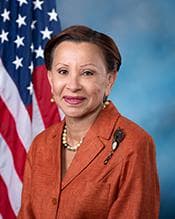
- Nydia Velázquez
- Cosponsors
- None
- Introduced
- In Committee
What this bill would do
This bill, known as the "Strengthening Capacity for Disaster Resilient Territories Act," directs FEMA to establish a Territorial Disaster Recovery Program. The program is intended to continuously identify, monitor, and address capability gaps that prevent U.S. territories from completing recovery activities after major disasters. It requires the FEMA Administrator to provide tailored technical assistance and design specific training courses for entities in the territories. Additionally, the Administrator must develop best practices and foster collaboration with local community leaders. The bill includes a requirement for regular reports to Congress regarding the program's progress and findings. Finally, it authorizes $50,000,000 in appropriations for each fiscal year from 2026 through 2030.
Yes· 3 of 13
Would people in rural areas be better off under this?+4
The bill specifically mandates assistance tailored to those in remote or difficult-to-access areas.
Does this narrow racial gaps in how people are treated?+4
The bill specifically requires technical assistance tailored to the needs of minority cultural groups in the territories.
Would households on low incomes be better off under this?+3
Improved disaster recovery and housing assistance directly benefit low-income households in the territories.
The opposite
No question was scored the opposite.
Who it would affect, and how
Potential Positive Impacts for People
-
Tailored Technical Assistance: The program requires FEMA to provide assistance that considers the specific needs of applicants in remote areas, minority cultural groups, those with limited English proficiency, and those with limited internet access (Section 4(b)(2)).
-
Enhanced Training Opportunities: The establishment of specific online and in-person training courses aims to address capability gaps within the territories (Section 4(b)(3)).
-
Improved Local Collaboration: The bill mandates fostering meaningful collaboration with local experts and community leaders to ensure recovery activities are locally informed and relevant (Section 4(b)(6)).
-
Addressing Capability Gaps: By identifying and addressing factors that hinder the execution of recovery activities, the program aims to help entities better manage rebuilding infrastructure, housing, and community services (Section 4(a) and Section 3(4)).
Potential Negative Impacts for People
- No negative impacts are explicitly stated in the text of the bill.
Groups and Interests Ranking
Every group the model scored this bill for, from -10 to +10. Hover a score for the reason it gave.
- Demographic And Interest Groups
- Good For Rural Residents+4Good For Hispanic Americans+3Good For Low Income Households+3Good For Urban Residents+2
- Social Issues And Justice
- Improves Racial Equity+4Improves Affordable Housing+3Improves Poverty Reduction+2
- Economy And Finance
- Improves Economic Growth+3Increases Job Creation+3
- Environment Energy And Infrastructure
- Improves Roads And Bridges+3
- Healthcare
- Improves Healthcare Access+3
- Education And Technology
- Improves Internet Access+2
- Governance And Ideology
- Improves Government Transparency+2
- 9/19/2025
- Referred to the Subcommittee on Economic Development, Public Buildings, and Emergency Management.
- 9/18/2025
- Referred to the House Committee on Transportation and Infrastructure.
- Introduced in House