Bill · H.R. 5481· House(119-HR-5481)
Wildfire Smoke Relief Act
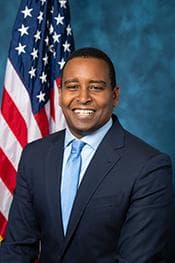
- Introduced
- 9/18/2025
- Last activity
- 9/19/2025 — Referred to the Subcommittee on Economic Development, Public Buildings, and Emergency Management.
- Sponsored by
- Joe Neguse
- Cosponsors
- - 5 - 0
- Introduced
- In Committee
What this bill would do
The Wildfire Smoke Relief Act aims to authorize transitional sheltering assistance for people living in areas with unhealthy air quality due to wildfires. The bill defines individuals at risk based on specific criteria such as low income, age, or certain health conditions. It directs the President to provide assistance through the Federal Emergency Management Agency's Transitional Sheltering Assistance Program. This assistance includes providing smoke-inhalation prevention equipment to qualified entities. Additionally, if equipment is not enough to reduce risk, cost-efficient transitional shelter assistance may be provided.
Yes· 3 of 7
Would people over 65 be better off under this?+5
The bill specifically protects individuals aged 65 or older from wildfire smoke-related illnesses.
Would households on low incomes be better off under this?+5
The bill provides targeted assistance to individuals earning no more than 200 percent of the poverty level.
Does this improve help for people hit by a disaster?+5
The bill authorizes the use of FEMA's Transitional Sheltering Assistance Program to help individuals during wildfire-related air quality emergencies.
The opposite
No question was scored the opposite.
Who it would affect, and how
Potential Positive Impacts for People
-
Access to prevention equipment: The bill allows qualified entities to provide individuals with items like portable air filtration units, air filters, and face masks or respirators to protect against smoke (Sec. 2(b)(1)).
-
Protection for homes: The assistance can include low-cost equipment intended to keep smoke out of a household, such as weather strips, ventilation equipment, or window coverings (Sec. 2(b)(1)(D)).
-
Shelter when equipment is insufficient: For individuals at risk where prevention equipment does not sufficiently reduce the risk of illness, the bill provides for cost-efficient transitional shelter assistance (Sec. 2(b)(2)).
-
Targeted support for vulnerable groups: The bill specifically identifies several groups that may benefit, including low-income individuals, parents or guardians of children under 19, pregnant women, individuals aged 65 or older, and those with certain chronic respiratory, cardiovascular, or smoke-exacerbated illnesses (Sec. 2(a)(1)).
Potential Negative Impacts for People
- No specific negative impacts are explicitly stated in the provided text.
Groups and Interests Ranking
Every group the model scored this bill for, from -10 to +10. Hover a score for the reason it gave.
- Demographic And Interest Groups
- Good For Low Income Households+5Good For Seniors+5Good For Children+4Good For Women+4
- Environment Energy And Infrastructure
- Improves Disaster Relief And F E M A+5
- Healthcare
- Improves Healthcare Access+4
- Social Issues And Justice
- Improves Poverty Reduction+2
- 11/21/2025
- 1 Cosponsor added.
- 9/30/2025
- 1 Cosponsor added.
- 9/19/2025
- Referred to the Subcommittee on Economic Development, Public Buildings, and Emergency Management.
- 9/18/2025
- Referred to the House Committee on Transportation and Infrastructure.
- 3 Cosponsors added.
- Introduced in House
One bill Congress.gov lists as related to this one — companions in the other chamber, earlier versions, and bills this one absorbed or was folded into.
 Janelle Bynum
Democrat · Oregon
 Maxine Dexter
Democrat · Oregon
 Doris Matsui
Democrat · California
 Joseph Morelle
Democrat · New York
 Melanie Stansbury
Democrat · New Mexico