Bill · H.R. 5442· House(119-HR-5442)
Inspired to Serve Act of 2025
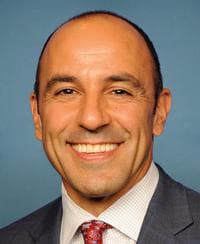
- Introduced
- 9/17/2025
- Last activity
- 12/19/2025 — Referred to the Subcommittee on Economic Opportunity.
- Sponsored by
- Jimmy Panetta
- Cosponsors
- - 0 - 1
- Introduced
- In Committee
What this bill would do
The Inspired to Serve Act of 2025 aims to expand and promote a culture of service across the United States by strengthening the nation's civic fabric. It prioritizes civic education and service-learning in schools while establishing a Council on Military, National, and Public Service to coordinate federal agency efforts. The legislation introduces various programs to advance military, national, and public service opportunities and modernizes federal personnel systems. Additionally, it creates new employment pathways and updates the Military Selective Service Act to strengthen national mobilization capabilities.
Yes· 3 of 23
Would students be better off under this?+8
The bill creates a Federal Fellowship and Scholarship Center and a Public Service Corps to support student career paths.
Would people in their twenties and thirties be better off under this?+7
The bill creates numerous fellowships, stipends, and career pathways specifically for young people.
Would veterans be better off under this, taking everything together?+6
The bill enhances hiring authorities, transition services, and recruitment for military veterans.
The opposite
Would union members be better off under this?-2
The bill proposes a new personnel system for the Veterans Health Administration that draws on private sector practices, requiring union consultation.
Does this strengthen the rights of workers to organise?-2
The bill directs the Secretary of Veterans Affairs to consult with labor unions regarding a new personnel system that adopts private sector practices.
Who it would affect, and how
Potential Positive Impacts for People
-
Enhanced Civic Education and Teacher Support: The bill establishes a Civic Education Fund to support high-quality civic education and service-learning programs (Sec. 101). It also provides grants to train teachers in effective strategies for instructing students in civic education (Sec. 101(c)).
-
Increased Opportunities for Students: The Service-Learning Fund aims to ensure all K-12 students receive in-class service-learning experiences by 2031 (Sec. 102(b)). Furthermore, the bill creates National Service Fellowships to provide students with service opportunities (Sec. 321).
-
Support for Military Personnel and Recruits: The bill authorizes pre-service tuition grants for technical degrees or certifications that meet critical military needs (Sec. 302). It also includes a plan to establish and support at least 6,000 Junior Reserve Officers' Training Corps (JROTC) units (Sec. 304).
-
Financial Benefits for National Service Participants: The legislation provides for increases in national service living allowances (Sec. 327) and national service educational awards (Sec. 330). National service educational awards will be excluded from gross income, meaning the awards and associated student loan debt discharge will not be taxed (Sec. 333). Additionally, the bill introduces a discounted end-of-service cash stipend for national service members (Sec. 332).
-
Improved Support for Underserved Communities: Provisions include wraparound support services, such as career counseling and mental health assistance, specifically for disadvantaged youth, those in Indian lands, or those in rural communities (Sec. 329).
-
Expanded Career Opportunities and Employment Assistance: The bill enhances job training and transitional services for those transitioning from service, providing information on public service opportunities and federal career advantages (Sec. 206). Participants in national service programs, including Peace Corps and Americorps, will be eligible for noncompetitive appointment to competitive service positions for 36 months (Sec. 335).
-
New Educational and Career Pathways: The establishment of a Federal Fellowship and Scholarship Center and a Public Service Corps provides students with financial support and work experience to prepare them for permanent federal employment (Sec. 361, Sec. 362).
-
Enhanced Benefits for Federal Employees: The bill authorizes a "cafeteria plan" for employees to select benefits like life insurance, disability-income insurance, and enhanced dental or vision benefits (Sec. 347). A "modern benefits pilot program" is also authorized to offer enhanced Thrift Savings Plan contributions, paid leave, and immediate eligibility for disability-income insurance (Sec. 348).
-
Support for Career Transitions: A federal reskilling program allows employees to gain technical skills to transfer into different government positions at a class and grade at or higher than their current position (Sec. 371).
-
Professional Portability for Health Care Workers: Federal health care professionals can practice their profession at any location in the U.S., its territories, or possessions, regardless of where their license was originally issued, provided it is within authorized federal duties (Sec. 376).
-
Improved Intern Compensation: Legislative branch offices must pay interns at a rate not less than minimum wage, and federal agencies may reimburse interns for transportation and subsistence expenses (Sec. 365).
Potential Negative Impacts for People
-
Service Obligations for Educational Benefits: Individuals receiving pre-service tuition grants must sign an enlistment contract for military service upon completing their educational program (Sec. 302(b)).
-
Repayment Requirements: If an individual receiving a tuition grant is unable or unwilling to serve in the military as expected, they may have to repay the funds (Sec. 302(b)). Similarly, students in the Public Service Corps who fail to complete required instruction, fail to graduate, or fail to complete their service commitment must repay their scholarship (Sec. 362). Additionally, military service academy cadets in the public service cadet program who do not serve the required 5-year period after graduation must pay back the cost of their education (Sec. 364).
-
Restrictions on Stipends: Individuals who choose to receive a national service educational award are restricted from receiving the end-of-service cash stipend (Sec. 332(a)(2)(C)).
-
Potential Disciplinary Measures for Cybersecurity Reserve Members: Members of the Civilian Cybersecurity Reserve may face penalties, such as loss of security clearance or recoupment of pay and benefits, if they fail to respond to activation (Sec. 372).
Groups and Interests Ranking
Every group the model scored this bill for, from -10 to +10. Hover a score for the reason it gave.
- Demographic And Interest Groups
- Good For Students+8Good For Young Adults+7Good For Veterans+6Good For Children+5Good For Low Income Households+5Good For Native Americans+5Good For Rural Residents+5Good For Seniors+4Good For Middle Class Households+3Good For Business Owners+2Good For Union Workers-2
- Education And Technology
- Increases Public School Funding+6Improves College Affordability+5Increases Scientific Research Funding+4
- Economy And Finance
- Increases Job Creation+5Increases Minimum Wage+5Improves Economic Growth+3Improves Union Protections-2
- National Security And Foreign Policy
- Improves Cybersecurity Defense+5Improves Veterans Benefits+5
- Healthcare
- Improves Healthcare Access+3Improves Veterans Healthcare+3
- Social Issues And Justice
- Improves Poverty Reduction+4Improves Voting Rights+1
- Governance And Ideology
- Improves Government Transparency+3
- 12/19/2025
- Referred to the Subcommittee on Economic Opportunity.
- 9/17/2025
- Referred to the Committee on Education and Workforce, and in addition to the Committees on Armed Services, Foreign Affairs, Agriculture, Natural Resources, Ways and Means, Oversight and Government Reform, Veterans' Affairs, Homeland Security, Intelligence (Permanent Select), House Administration, the Judiciary, and Energy and Commerce, for a period to be subsequently determined by the Speaker, in each case for consideration of such provisions as fall within the jurisdiction of the committee concerned.
- 1 Cosponsor added.
- Introduced in House
 Don Bacon
Republican · Nebraska