Bill · H.R. 5412· House(119-HR-5412)
Food Farmacy Act of 2025
- Introduced
- 9/16/2025
- Last activity
- 9/16/2025 — Referred to the House Committee on Energy and Commerce.
- Sponsored by
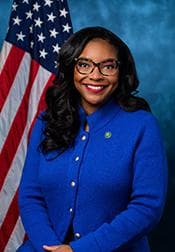
- Emilia Sykes
- Cosponsors
- - 1 - 2
- Introduced
- In Committee
What this bill would do
This bill is called the Food Farmacy Act of 2025. It allows the Secretary of Health and Human Services to provide grants to help set up and run healthy food pharmacies. These food pharmacies aim to improve people's health by giving them access to nutritious foods and nutritional guidance. Eligible groups for these grants include non-profit health care providers, state or local governments, and tribal organizations. The bill provides funding authorization of ten million dollars for each of fiscal years 2026 through 2030.
Yes· 3 of 28
Would households on low incomes be better off under this?+7
The bill specifically prioritizes low-income communities and provides free food and guidance for Medicaid and SNAP beneficiaries.
Does this make health care easier to get in general?+6
The bill establishes grants for healthy food pharmacies to expand access to nutritious foods and nutritional guidance.
Would people in rural areas be better off under this?+5
Rural communities are explicitly prioritized for receiving grants to establish food pharmacies and mobile units.
The opposite
Does this reduce what the federal government spends?-1
The bill authorizes $10,000,000 in appropriations for each of fiscal years 2026 through 2030.
Who it would affect, and how
Potential Positive Impacts for People
-
Under Section 320C(b), grant money can be used for things like building or renovating food pharmacies, buying equipment and mobile food units, paying staff, and buying food. This helps set up physical locations to get healthy food directly to the people who need it.
-
Under Section 320C(c)(2), healthy food pharmacies must prioritize low-income, rural, or food-insecure communities and provide food and guidance completely free of charge to individuals receiving Medicaid or SNAP benefits. This ensures that our most vulnerable neighbors get direct help without financial burden.
-
Under Section 320C(c)(2)(A), patrons receive both access to healthy foods and nutritional guidance from a qualified health care professional. This provides everyday people with the educational tools to make long-term healthy lifestyle choices.
Potential Negative Impacts for People
- The provided text does not contain any specific sections or provisions that outline potential negative consequences, burdens, or harms for individuals or groups of people in the United States.
Groups and Interests Ranking
Every group the model scored this bill for, from -10 to +10. Hover a score for the reason it gave.
- Demographic And Interest Groups
- Good For Low Income Households+7Good For Rural Residents+5Good For Children+4Good For Native Americans+4Good For Retirees+4Good For Seniors+4Good For African Americans+3Good For Hispanic Americans+3Good For Middle Aged+3Good For Urban Residents+3Good For Veterans+3Good For Women+3Good For Young Adults+3Good For Asian Americans+2Good For Farmers+2Good For Immigrants+2Good For Men+2Good For Middle Class Households+2Good For Students+2Good For White Americans+2Good For Business Owners+1Good For L G B T Q Community+1
- Healthcare
- Improves Healthcare Access+6
- Social Issues And Justice
- Improves Poverty Reduction+5
- Environment Energy And Infrastructure
- Improves Rural Development+4
- Governance And Ideology
- Improves Government Transparency+2Increases Federal Power+1
- Economy And Finance
- Increases Job Creation+2Reduces Government Spending-1
- 1/8/2026
- 1 Cosponsor added.
- 9/16/2025
- Referred to the House Committee on Energy and Commerce.
- 2 Cosponsors added.
- Introduced in House
 Janelle Bynum
Democrat · Oregon
 Monica De La Cruz
Republican · Texas
 Brian Fitzpatrick
Republican · Pennsylvania