Bill · H.R. 5406· House(119-HR-5406)
Opportunities to Support Mothers and Deliver Children Act
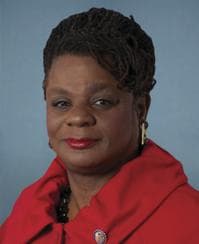
- Introduced
- 9/16/2025
- Last activity
- 9/16/2025 — Referred to the House Committee on Ways and Means.
- Sponsored by
- Gwen Moore
- Cosponsors
- None
- Introduced
- In Committee
What this bill would do
This bill is known as the Opportunities to Support Mothers and Deliver Children Act. It amends the Social Security Act to provide grants for demonstration projects. These projects will offer education and training to help eligible individuals enter and follow career pathways in pregnancy, childbirth, or postpartum fields. The grants are part of the Health Profession Opportunity Grant Program. The legislation specifically targets states that recognize and provide payment for doulas or midwives under health insurance plans. An amount of $10,000,000 is appropriated for fiscal year 2026 to carry out this subsection.
Yes· 3 of 17
Would households on low incomes be better off under this?+5
The bill specifically prioritizes low-income individuals and those earning up to 138 percent of the Federal poverty level for training and career advancement.
Would women be better off under this?+5
The legislation directly supports maternal healthcare providers and careers predominantly pursued by women.
Is this likely to create jobs?+4
The bill provides grants for demonstration projects to train individuals for career pathways in pregnancy, childbirth, and postpartum fields.
The opposite
No question was scored the opposite.
Who it would affect, and how
Potential Positive Impacts for People
-
Education and Training Grants (Section 2, adding Section 2008(d)(1)): This provision awards grants to conduct demonstration projects that provide education and training for individuals to enter careers in pregnancy, childbirth, or postpartum fields. This is positive because it helps people gain specific job skills in maternal care within states that recognize doulas or midwives.
-
Support for Low-Income Individuals (Section 2, adding Section 2008(d)(3)(C) and (d)(5)(B)): Projects must demonstrate experience or a plan to work with low-income populations, defined as individuals whose income does not exceed 138 percent of the Federal poverty level. This is positive because it directly targets economic opportunities and career pathways for lower-income workers.
-
Workforce Evaluations and Benefits (Section 2, adding Section 2008(d)(4)): The bill mandates evaluations of the projects to identify successful activities for creating entry-level workforce pathways that provide increased wages and affordable benefits, including health care coverage. This is positive because it aims to ensure workers receive better pay and healthcare.
Potential Negative Impacts for People
Based on the provided text, there are no explicitly stated negative consequences or burdens for individuals or groups of people in the United States.
Groups and Interests Ranking
Every group the model scored this bill for, from -10 to +10. Hover a score for the reason it gave.
- Demographic And Interest Groups
- Good For Low Income Households+5Good For Women+5Good For Children+3Good For Young Adults+3Good For African Americans+2Good For Native Americans+2Good For Students+2Good For Hispanic Americans+1Good For Middle Aged+1Good For Middle Class Households+1Good For Union Workers+1
- Economy And Finance
- Increases Job Creation+4Improves Economic Growth+1
- Social Issues And Justice
- Improves Poverty Reduction+3Improves Gender Equality+2
- Healthcare
- Improves Healthcare Access+3
- Governance And Ideology
- Increases Federal Power+1
- 9/16/2025
- Referred to the House Committee on Ways and Means.
- Introduced in House