Bill · H.R. 5388· House(119-HR-5388)
American Artificial Intelligence Leadership and Uniformity Act
- Introduced
- 9/16/2025
- Last activity
- 12/19/2025 — Referred to the Subcommittee on Oversight and Investigations.
- Sponsored by
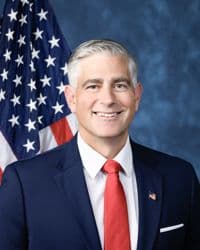
- Michael Baumgartner
- Cosponsors
- None
- Introduced
- In Committee
What this bill would do
The American Artificial Intelligence Leadership and Uniformity Act aims to maintain U.S. global leadership and technological dominance in artificial intelligence. To achieve this, the bill requires the President to develop and submit a National Artificial Intelligence Action Plan with annual updates. The legislation establishes a five-year moratorium that preempts certain State and local laws that restrict AI models, systems, or automated decision systems used in interstate commerce. This framework is intended to provide regulatory certainty and reduce the burden of a patchwork of different State rules. Additionally, the plan will focus on removing barriers to innovation and managing risks through recognized standards.
Yes· 3 of 8
Does this make it easier to run a small business?+7
The Act specifically aims to minimize disproportionate compliance burdens on small businesses and expand their access to AI resources.
Does this give the federal government more power?+7
The bill establishes a federal moratorium that preempts state and local laws regulating AI in interstate commerce.
Would business owners be better off under this?+7
The bill supports business owners by providing regulatory certainty and reducing compliance burdens through a national framework.
The opposite
No question was scored the opposite.
Who it would affect, and how
Potential Positive Impacts for People
-
Economic Competitiveness and Innovation: The bill seeks to sustain American global AI dominance to promote economic competitiveness and human flourishing (Section 4, Subsection 1).
-
Support for Small Businesses: The Act aims to minimize disproportionate compliance burdens on small businesses to support their ability to adopt AI tools and compete (Section 4, Subsection 6; Section 5, Subsection c, Paragraph 5).
-
Regulatory Clarity: By creating a national framework, the bill intends to prevent the uncertainty caused by a patchwork of divergent State AI rules (Section 3, Paragraph 6; Section 4, Subsection 4).
-
Access to Resources: The required National Artificial Intelligence Action Plan includes measures to expand access to foundation models, computing resources, datasets, and technical assistance (Section 5, Subsection c, Paragraph 5).
-
Streamlined Processes: The plan aims to identify actions to remove barriers to innovation across various processes, including procurement, licensing, and zoning (Section 5, Subsection c, Paragraph 1).
Potential Negative Impacts for People
-
Restriction of State Authority: The bill establishes a five-year moratorium that prevents States or their political subdivisions from enforcing laws or regulations that limit, restrict, or regulate AI models, systems, or automated decision systems engaged in interstate commerce (Section 6, Subsection a, Paragraph 1).
-
Impact on State-Level Regulations: The National Artificial Intelligence Action Plan must identify State and local laws that may conflict with or unduly burden the implementation of the federal policy (Section 5, Subsection e, Paragraph 1).
Groups and Interests Ranking
Every group the model scored this bill for, from -10 to +10. Hover a score for the reason it gave.
- Economy And Finance
- Improves Small Business Support+7Improves Economic Growth+6Increases Job Creation+5
- Governance And Ideology
- Increases Federal Power+7Improves Government Transparency+3
- Demographic And Interest Groups
- Good For Business Owners+7
- Education And Technology
- Increases Scientific Research Funding+5
- National Security And Foreign Policy
- Improves Cybersecurity Defense+5
- 12/19/2025
- Referred to the Subcommittee on Oversight and Investigations.
- 9/17/2025
- Referred to the Subcommittee on Cybersecurity and Infrastructure Protection.
- 9/16/2025
- Referred to the Committee on Science, Space, and Technology, and in addition to the Committees on Foreign Affairs, Armed Services, Homeland Security, Oversight and Government Reform, the Judiciary, Energy and Commerce, Small Business, Education and Workforce, Financial Services, Veterans' Affairs, and Transportation and Infrastructure, for a period to be subsequently determined by the Speaker, in each case for consideration of such provisions as fall within the jurisdiction of the committee concerned.
- Introduced in House