Bill · H.R. 5270· House(119-HR-5270)
Stress Testing Accountability and Transparency Act
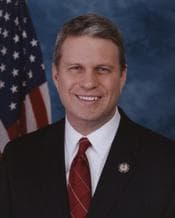
- Introduced
- 9/10/2025
- Last activity
- 11/4/2025 — Placed on the Union Calendar, Calendar No. 318.
- Sponsored by
- Bill Huizenga
- Cosponsors
- - 2 - 0
- Introduced
- On Calendar
What this bill would do
The Stress Testing Accountability and Transparency Act requires the Board of Governors of the Federal Reserve System to issue specific rules for stress testing. This includes establishing methodologies, models, and assumptions used to determine stress capital buffer requirements. The bill mandates that the Board publicly disclose scenarios used in stress tests at least 60 days in advance. Additionally, it prohibits climate-related stress tests for nonbank financial companies or bank holding companies under specific authority. Finally, the GAO is tasked with conducting a study every three years regarding the effectiveness of these stress tests.
Yes· 3 of 5
Does this make what the government does easier for the public to see?+3
The bill mandates public disclosure of stress test scenarios and periodic GAO reports on stress test effectiveness.
Is this likely to grow the economy?+2
The bill promotes efficiency by requiring the Board to prevent the double-counting of capital requirements for the same risks.
Does this give people more protection from unfair business practices?+2
The bill increases transparency by requiring the Federal Reserve to disclose stress test scenarios 60 days in advance.
The opposite
Does this cut the pollution that drives climate change?-3
The bill prohibits the use of climate-related stress tests for nonbank financial companies and bank holding companies.
Who it would affect, and how
Potential Positive Impacts for People
-
Increased Transparency in Methodologies: The Board must issue a rule establishing models, assumptions, and formulas used for stress tests, which helps clarify how stress capital buffer requirements are determined (Section 2(a)(1)).
-
Prevention of Redundant Capital Requirements: The Board is required to ensure that there is no double-counting of capital requirements for the same risks in both stress capital buffer and risk-based capital requirements (Section 2(c)).
-
Advance Notice of Scenarios: The Board must publicly disclose each scenario to be used in a stress test at least 60 days before conducting the test (Section 3(a)).
-
Regular Oversight and Evaluation: The Comptroller General is required to conduct a study every three years to evaluate the effectiveness of stress tests regarding the safety and soundness of companies and the stability of the financial system (Section 4).
Potential Negative Impacts for People
- Prohibition of Climate-Related Stress Tests: The bill prevents the Board from subjecting nonbank financial companies or bank holding companies to climate-related stress tests using certain existing authority (Section 3(b)).
Groups and Interests Ranking
Every group the model scored this bill for, from -10 to +10. Hover a score for the reason it gave.
- Economy And Finance
- Improves Consumer Protection+2Improves Economic Growth+2Improves Fiscal Responsibility+1
- Environment Energy And Infrastructure
- Reduces Carbon Emissions-3
- Governance And Ideology
- Improves Government Transparency+3
- Demographic And Interest Groups
- Good For Business Owners+2
- 11/4/2025
- Reported (Amended) by the Committee on Financial Services. H. Rept. 119-366.
- Placed on the Union Calendar, Calendar No. 318.
- 9/16/2025
- Committee Consideration and Mark-up Session Held
- Ordered to be Reported (Amended) by the Yeas and Nays: 28 - 24.
- 9/15/2025
- 1 Cosponsor added.
- 9/10/2025
- Referred to the House Committee on Financial Services.
- 1 Cosponsor added.
- Introduced in House
 Andy Barr
Republican · Kentucky
 Pete Sessions
Republican · Texas