Bill · H.R. 5224· House(119-HR-5224)
Reducing Obesity in Youth Act of 2025
- Introduced
- 9/9/2025
- Last activity
- 9/9/2025 — Referred to the House Committee on Energy and Commerce.
- Sponsored by
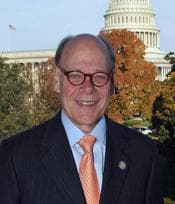
- Steve Cohen
- Cosponsors
- None
- Introduced
- In Committee
What this bill would do
The Reducing Obesity in Youth Act of 2025 aims to amend the Public Health Service Act to promote healthy eating and physical activity among children. It establishes the Healthy Kids Grant Program to improve health outcomes for children ages birth through 5 in early care and education settings. Through competitive 5-year grants, the program intends to address food insecurity and promote healthy habits. The Act targets the training of providers and the building of State capacity to integrate nutrition and physical activity. It also seeks to test innovative approaches to support child development and engage families.
Yes· 3 of 9
Would children be better off under this?+8
The bill specifically targets the health, nutrition, and physical activity of children ages birth through 5.
Does this put more money into medical research?+6
The act authorizes $5,000,000 annually for a grant program designed to test innovative approaches to childhood obesity and food insecurity.
Would households on low incomes be better off under this?+5
The bill aims to address food insecurity which is a critical issue for families receiving free or reduced-price meals.
The opposite
No question was scored the opposite.
Who it would affect, and how
Potential Positive Impacts for People
-
Improved Health Habits for Young Children: The bill aims to enhance the training of early care and education providers to support healthy eating and physical activity for children ages birth through 5 (Section 2(b)(1); Section 3(a)(1)).
-
Addressing Food Insecurity: The grant program is designed to address food insecurity among children in early care and education settings (Section 3(a)(1); Section 3(a)(2)).
-
Support for States and Programs: The Act provides for building State capacity by linking early care and education programs to nutrition supports and integrating healthy eating and physical activity into existing systems (Section 3(d)(1)(B)).
-
Innovation in Child Development: Funds may be used to test new approaches such as enhancing access to quality foods in early care settings and linking care providers with health care providers (Section 3(d)(1)(C)).
-
Diverse Reach: Grant recipients are required to ensure implementing partners serve populations that are racially, ethnically, socioeconomically, and geographically diverse, including both rural and urban settings (Section 3(d)(2)).
Potential Negative Impacts for People
- No specific negative impacts or burdens are explicitly mentioned in the provided text.
Groups and Interests Ranking
Every group the model scored this bill for, from -10 to +10. Hover a score for the reason it gave.
- Demographic And Interest Groups
- Good For Children+8Good For Low Income Households+5Good For Rural Residents+2Good For Urban Residents+2
- Healthcare
- Increases Research Funding+6Improves Healthcare Access+5
- Social Issues And Justice
- Improves Poverty Reduction+4Improves Racial Equity+4
- Education And Technology
- Improves School Choice+1
- 9/9/2025
- Referred to the House Committee on Energy and Commerce.
- Introduced in House
One bill Congress.gov lists as related to this one — companions in the other chamber, earlier versions, and bills this one absorbed or was folded into.