Bill · H.R. 5186· House(119-HR-5186)
To authorize the Secretary of Defense to carry out a program to support the defense biotechnology supply chain, and for other purposes.
- Introduced
- 9/8/2025
- Last activity
- 9/8/2025 — Referred to the House Committee on Armed Services.
- Sponsored by
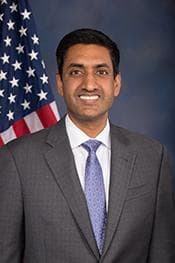
- Ro Khanna
- Cosponsors
- - 2 - 0
- Introduced
- In Committee
What this bill would do
This bill allows the Secretary of Defense to start a program to support the defense biotechnology supply chain. The program focuses on developing and scaling biotechnology research for products like chemicals, fuels, and materials. It aims to make the defense supply chain more resilient and less dependent on foreign sources. The Secretary can work with military labs, academic organizations, and commercial entities. The program is set to end after 10 years unless the President extends it for national security or economic needs.
Yes· 3 of 20
Does this put more money into scientific research?+8
Specifically authorizes the scaling and transition of biotechnology research.
Would business owners be better off under this?+6
Opens grant and contract opportunities for commercial entities in biotechnology.
Would farmers be better off under this?+6
Promotes the use of next-generation feedstocks, which directly benefits agricultural producers.
The opposite
Does this reduce what is spent on the military?-2
The bill authorizes a new spending program for biotechnology supply chains.
Who it would affect, and how
Potential Positive Impacts for People
-
Workforce Development: The bill allows for initiatives to support education, training, and workforce development to create a skilled biomanufacturing workforce (Section 1(a)(2)(B)(v)).
-
Local Economic Growth: The program promotes using next-generation feedstocks and processes that support local economic growth (Section 1(a)(2)(D)).
-
Economic Partnerships: The bill enables the government to enter into grants, contracts, and cooperative agreements with non-Federal entities, including commercial entities and research institutions (Section 1(a)(2)(B)(iv)).
Potential Negative Impacts for People
- No negative impacts for people are explicitly mentioned in the provided text.
Groups and Interests Ranking
Every group the model scored this bill for, from -10 to +10. Hover a score for the reason it gave.
- Demographic And Interest Groups
- Good For Business Owners+6Good For Farmers+6Good For Rural Residents+6Good For Students+6Good For Young Adults+5Good For Middle Aged+3Good For Middle Class Households+3Good For Low Income Households+2
- Environment Energy And Infrastructure
- Improves Rural Development+5Increases Renewable Energy Investment+5Reduces Carbon Emissions+4Reduces Fossil Fuel Production+3
- Economy And Finance
- Increases Job Creation+5Improves Economic Growth+4Improves Small Business Support+4
- Education And Technology
- Increases Scientific Research Funding+8
- Healthcare
- Increases Research Funding+6
- Governance And Ideology
- Improves Government Transparency+3Increases Federal Power+2
- National Security And Foreign Policy
- Improves International Trade+3Reduces Military Spending-2
- 9/8/2025
- Referred to the House Committee on Armed Services.
- 2 Cosponsors added.
- Introduced in House
One bill Congress.gov lists as related to this one — companions in the other chamber, earlier versions, and bills this one absorbed or was folded into.
 Donald Davis
Democrat · North Carolina
 John Garamendi
Democrat · California